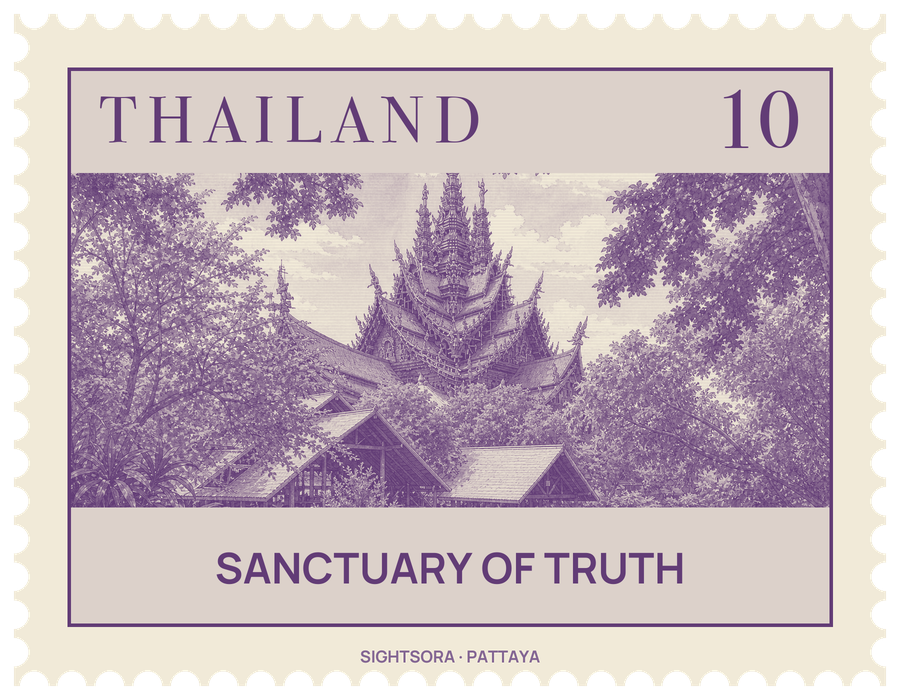
It was designed by the Thai businessman Lek Viriyaphan as a museum on the theme of the Ayutthaya Kingdom and of Hindu and Buddhist belief, and work on it began in 1981. It stands on 13 hectares of land and encloses 2,115 square metres of interior space, filled with nothing but wood-carved idols and sculptures.
Several kinds of timber give different parts of the building different textures: teak, Xylia xylocarpa, Mai Panchaat and takien, the oldest wood used, which forms the main post. The design takes its cue from the temples of Ayutthaya, and the hand-carved ornament draws on both Hindu and Buddhist traditions. On the grounds visitors can watch wood carvers at work on the structure.
The building sets out to show major Eastern religious ideas and the cycle of life. On the roof stand a four-faced Brahma, honouring father, mother, teacher and king, and the elephant-headed Ganesha. Each hall has its own theme: the northern hall holds Guanyin and other figures on the wisdom of release, the southern hall the sun, moon and planets and their effect on human well-being, the western hall the four classical elements with the Hindu Trinity of Brahma, Vishnu and Shiva, and the eastern hall the family.