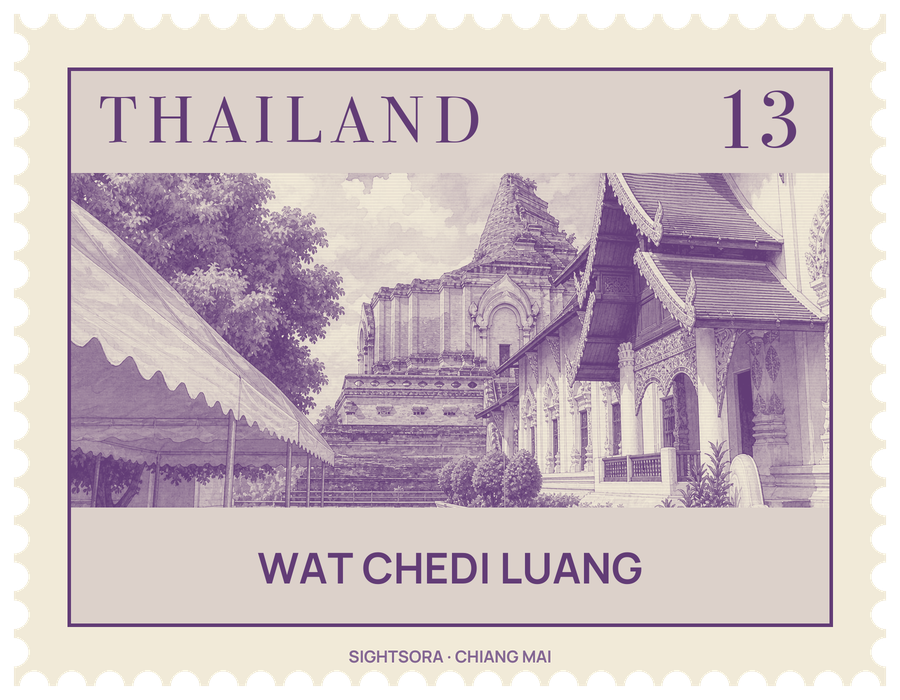
Its grounds join what were once three separate temples, Wat Sukmin and Wat Ho Tham besides Wat Chedi Luang itself. The chedi was begun in the 14th century, when Saenmueangma planned it as the resting place for his father's ashes; left unfinished after ten years, it was taken up again by his widow and completed only in the mid-15th century under Tilokaraj, when it stood 82 metres high on a base 54 metres across.
In 1468 the Emerald Buddha was placed in the chedi's eastern niche. The earthquake of 1545 brought down the upper 30 metres of the structure, and in 1551 the Emerald Buddha left for Luang Prabang. The chedi was partly rebuilt in the early 1990s with funding from UNESCO and the Japanese government, work that drew criticism from those who see some of the new elements as Central Thai rather than Lanna in style. For the chedi's 600th anniversary in 1995, a black jade copy of the Emerald Buddha, officially Phra Phut Chaloem Sirirat and commonly called Phra Yok, was set in the restored eastern niche.
The grounds also hold Chiang Mai's city pillar, Sao Inthakin, which Kawila moved here from Wat Sadeu Muang in 1800, planting three resin trees beside it to help it guard the town. In a wihan near the entrance sits Phra Chao Attarot, the "Eighteen-cubit Buddha", cast in the late 14th century, and a pavilion on the far side of the chedi shelters a reclining Buddha.