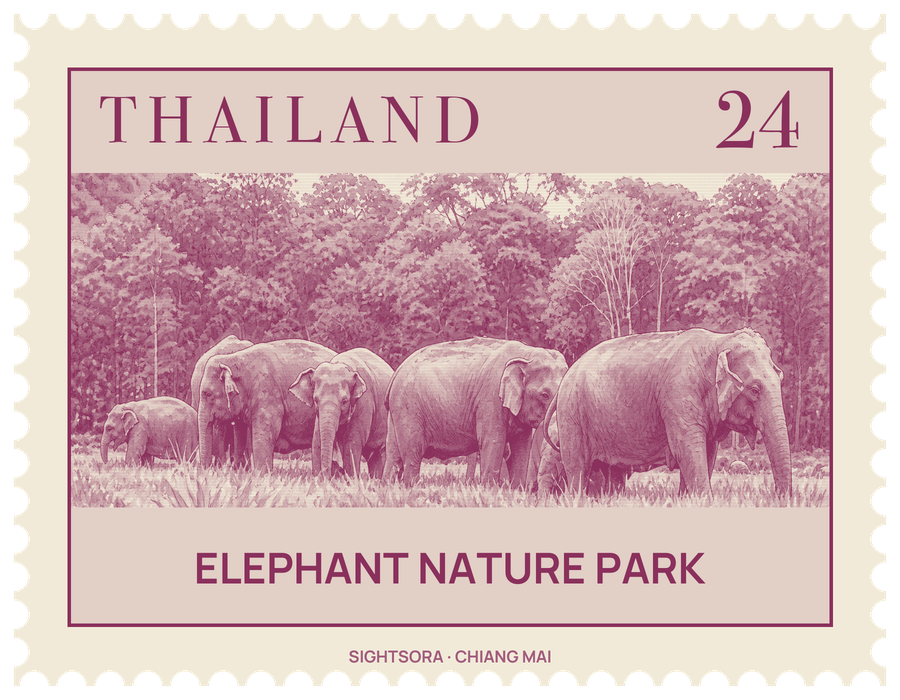
The park describes itself as a rescue and rehabilitation centre, and its herds include blind, disabled, orphaned and elderly animals, many carrying physical and psychological injuries from their working lives. It is the sanctuary of Saengduean Chailert, an elephant rights campaigner known as Lek.
The background is the end of logging. When Thailand banned teak logging in 1989, many of the elephants used in it were abandoned or sold into tourism or into begging in the cities. The park took shape in the 1990s, run with the tour firm Green Tours on land Chailert partly owned and partly leased from the government, and at first it still put on a daily show with tricks and offered rides. Chailert's aim was to end the performances, and by 2005 they had stopped; the park moved to a model in which visitors come to help look after the elephants, and some stay for a week or more.
Visitors watch the elephants as they live in the herds they have formed, roaming the open pasture and using the river, purpose-built pools and mud pits; raised Skywalk platforms let people observe them from a distance. Bathing in dust, mud and sand is part of their daily routine, and one of the sights the park itself mentions is the herd wandering down to the river towards evening, though the elephants decide for themselves. Volunteers on longer stays cut grass and cornstalks, wash and prepare fruit and clean the shelters.
Each animal comes with its own history. Jokia, born in 1960, hauled logs uphill for years. Pookie worked in logging until the 1989 ban and was then forced back into illegal logging and later a trekking camp, before being rescued in June 2015. Chang Yim, whose name means Smiling Elephant, was born in the park on July 12, 2009, to Dok Ngern. Alongside the elephants the park cares for rescued dogs, cats, birds and water buffaloes. In September 2024 the floods brought by Typhoon Yagi reached the park, forcing the evacuation of people and animals, and two elephants were reported dead on 8 October.