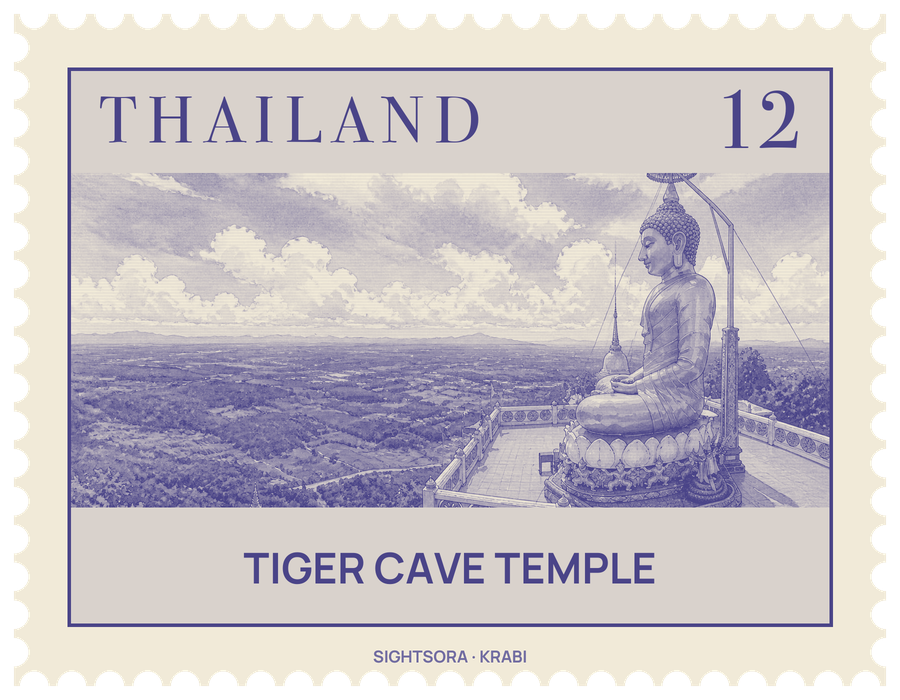
It began in 1975, when a Vipassana monk, Ajahn Jumnean Seelasettho, came to meditate in the cave and saw tigers roaming around it. Another story tells of a single huge tiger living there, and the name also refers to paw prints on the cave walls and to a bulge in the rock shaped like a tiger's paw.
The temple is a Thai Buddhist meditation centre and also a place of archaeological interest: stone tools, pottery shards and moulded Buddha footprints have been found around the caves and grounds. Visitors can enter four of the caves, Tum Lod, Tum Luk, Tum Khon Than and Tum Chang Kaeo, and human skeletons and decorated skulls are on view in parts of the temple. A separate flight of 184 steps leads to the foothills where monks live in caves, and monkeys wander the lower stairs and grounds.
The main stairway climbs 1,260 steps to the summit at 278 metres, some of its risers more than 30 centimetres high. At the top stands a large golden Buddha statue, and from the shrine there the view reaches down over the rest of the temple and across a large part of Krabi town.