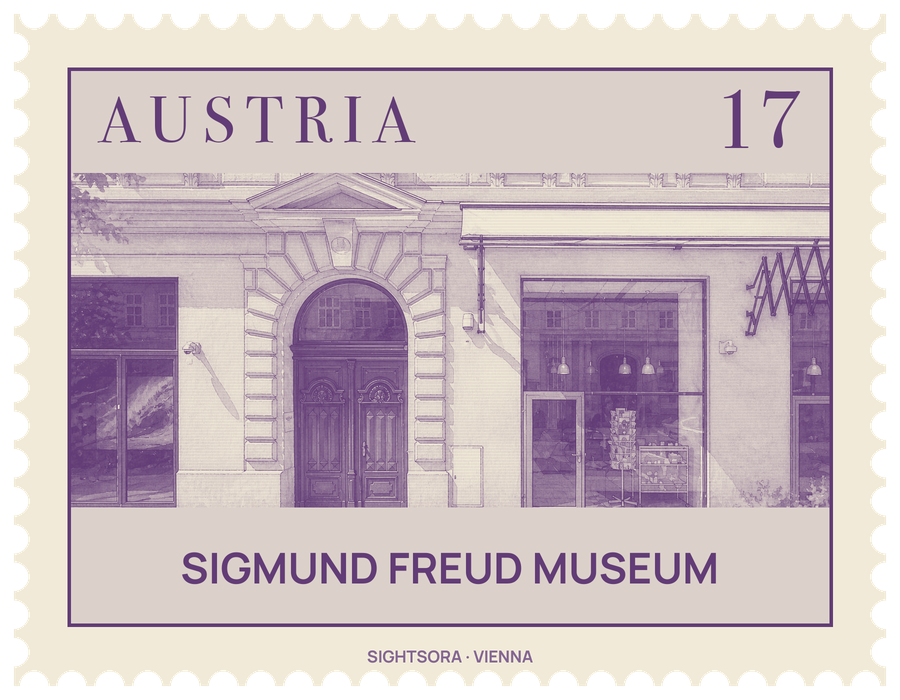
The museum regards the address as the birthplace of psychoanalysis. It opened in 1971, with Anna Freud present at the ceremony, and has been run since 2003 by the Sigmund Freud Foundation, which received the whole building as an endowment.
The house was brand new when Freud moved in: it went up in 1891, replacing an older building on the site that had once been the home of Victor Adler. After a renovation and expansion completed in 2020, every room of the Freud family's private quarters is on display, together with the consulting rooms of both Sigmund and Anna Freud. Permanent exhibitions trace how psychoanalysis developed, how the Freud family lived and what happened to the house.
Visitors find original objects that belonged to Freud, the waiting room of his practice and part of his large collection of antiquities. The famous couch is not here: when Freud emigrated he managed to bring his furniture along, and the couch and most of the original furnishings are in the Freud Museum in London. The museum has chosen to leave the treatment room empty rather than recreate it, describing that gap as a deliberate reminder of the forced exile and the dark turn of history that caused it.
Freud's first practice now holds a permanent exhibition titled Hidden Thoughts of a Visual Nature, made up of works from the museum's collection of conceptual art and draws links between psychoanalysis and the arts. The image archive holds around two thousand documents, mostly photographs, among them nearly every known picture of Freud and his family, alongside paintings, drawings and sculptures. A research library and the research institute of the foundation are housed in the building, and a café in the foyer serves drinks and wines from Vienna.
Since 1970 Vienna has marked Freud's birthday on 6 May with the annual Sigmund Freud Lecture, in which a psychoanalyst or other speaker takes up a present-day theme.