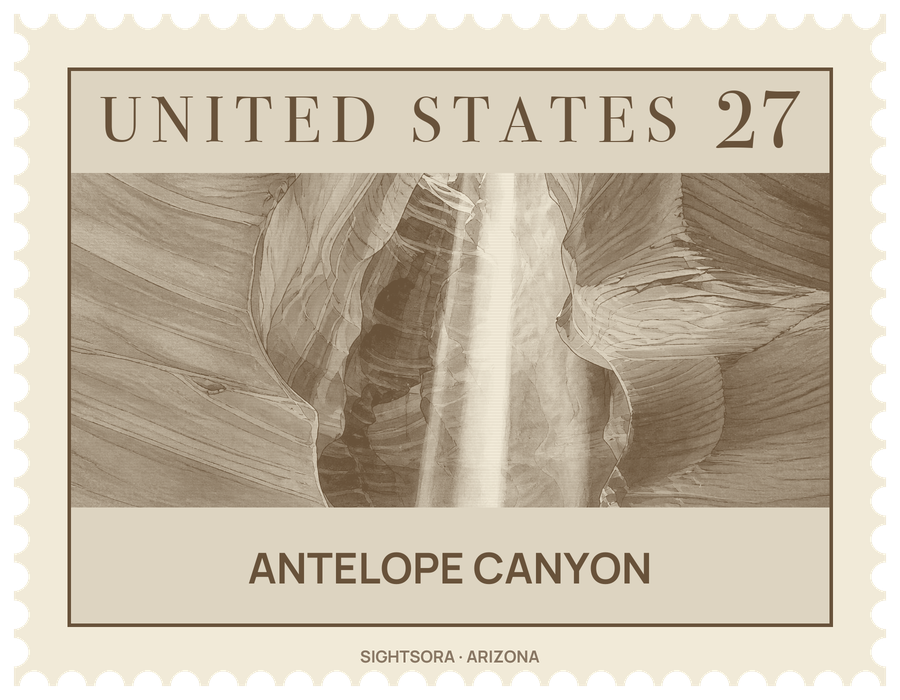
It is made up of six separate sections: Upper Antelope Canyon, also called The Crack; Lower Antelope Canyon, known as The Corkscrew; and Rattle Snake, Owl, Mountain Sheep and Canyon X. The canyon is the chief draw of Lake Powell Navajo Tribal Park, which also has a footpath to Rainbow Bridge National Monument.
The shapes are the work of water. Rain, especially in the monsoon season, collects in the wide basin above the slots and rushes into the narrow passages, carrying sand that scours the rock; over time the corridors have deepened and their sharp edges have been rounded off. The same process makes the canyon dangerous. Rain falling dozens of miles away can send a flash flood through the slots with little warning, and on August 12, 1997, a flood in Lower Antelope Canyon killed eleven tourists; it came from a thunderstorm 7 miles upstream, although hardly any rain fell at the canyon itself. Bolted ladders, cargo nets at the top and a weather radio with an alarm horn have since been installed, but the risk has not disappeared.
Partly for this reason, Antelope Canyon can only be visited on a guided tour run by an authorised operator, and reservations are needed. In Upper Antelope Canyon visitors step down from the tour truck straight onto the desert floor and walk in among the sandstone walls, while guides talk about the geology, Navajo culture and history, and help with camera settings. The contrast between bright reflected light and deep shadow makes photography tricky. Lower Antelope Canyon is a harder walk: it is longer and narrower in places, the footing is uneven, and flights of stairs lead down into it and back out, made slippery at times by sand trickling from above.
Below the Lower Canyon the floor drops under water, and this flooded section can be explored by kayak, paddleboard or small motorboat, with a landing further in from which visitors continue on foot.
Getting there
Tours start in the town of Page, which is about five hours by road from Las Vegas and from Phoenix. Authorised tour companies there drive visitors out to Upper Antelope Canyon in four-wheel-drive trucks; they do not provide long-distance transport.