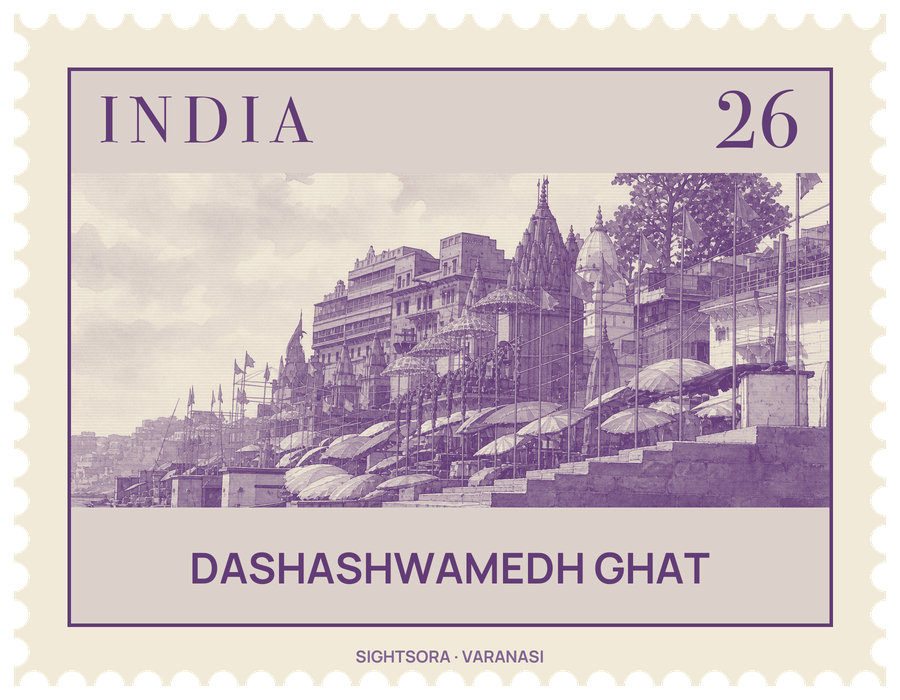
Its name refers to ten ashwamedha, or horse sacrifices, and two Hindu legends explain it: in one, Brahma carried out the ten sacrifices here on behalf of King Divodasa; in the other, put forward by the historian Jayaswal, they were performed in the second century by the Bhāra Shiva Nāgas, a dynasty that revived Hindu tradition. The ghat as it stands was built by the Peshwa Balaji Baji Rao soon after 1735, and towards the end of the 18th century Ahilyabai Holkar added a haveli nearby known as Ahilyabai Wada.
For Hindus this is a place of great religious significance on the river bank. Pilgrims come down to bathe in the Ganges at dawn, and for those following the Panchatrithi route it is the second of their ritual dips. Three Puranic lingas stand at the ghat: Bharmeshvara, said to have been set up by Bharma; Dāshashwamedheshvara; and Shūlatankeshvara, whose name means Shiva of the Spear and Hatchet. Bengali communities bring images of Durga here for immersion during Dusshera, and images of Kali during Diwali.
The ghat is best known for the Ganga Aarti, an evening ritual of offering prayer to the river that begins soon after sunset. A group of priests lift lamps called deepam and move them up and down in time with devotional bhajans, and the ceremony lasts about 45 minutes. Hundreds of people gather on the steps each evening to watch, and special aartis mark religious festivals.