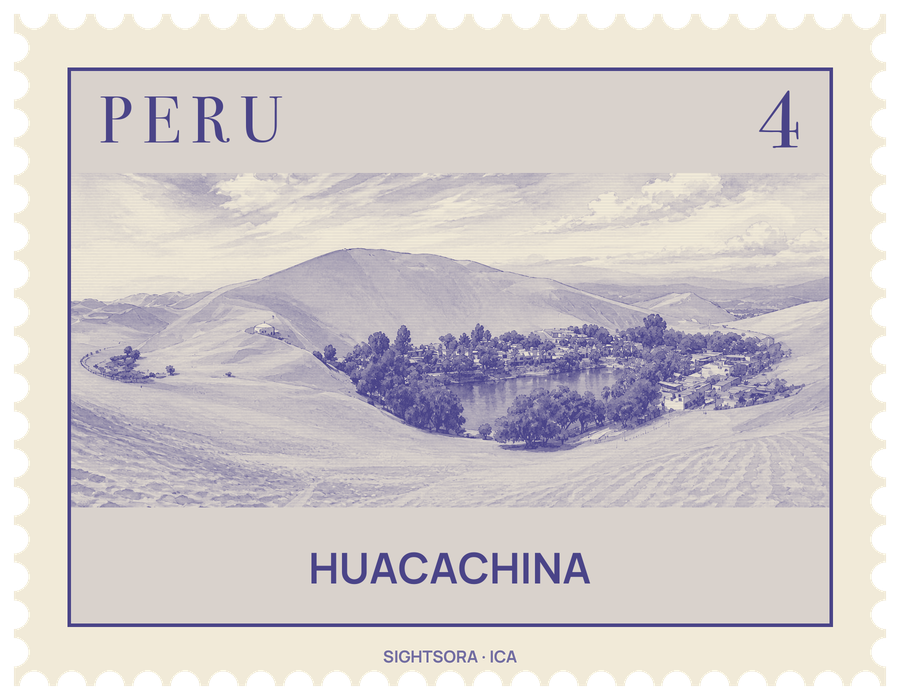
Only around 100 people live there permanently, but the green ring of the oasis against the desert is familiar to every Peruvian: in 1991 the oasis was printed on the reverse of the 50 nuevo sol banknote. The name comes from Quechua and is usually glossed as "hidden lagoon".
The lake fills from water seeping up out of underground aquifers. When heavy well-drilling in the early 2000s began to lower that supply, local business groups started pumping water into the lagoon in 2015 to keep the oasis alive. Local belief holds that its water and mud ease illnesses such as arthritis, rheumatism and asthma, and both residents and visitors wade in or coat themselves in mud. A legend explains the landscape: a princess bathing here fled from a hunter she saw approaching, the pool she left became the lagoon and the folds of her cloak became the dunes, and she is said to live on in the water as a mermaid.
For decades Huacachina has been a weekend retreat for families from Ica, and in the 60s it was a summer resort with an international following. Today most visitors come for the sand: the dunes around the oasis climb as high as 500 metres and are used for sandboarding, and dune buggies, known locally as areneros, race over the ridges.