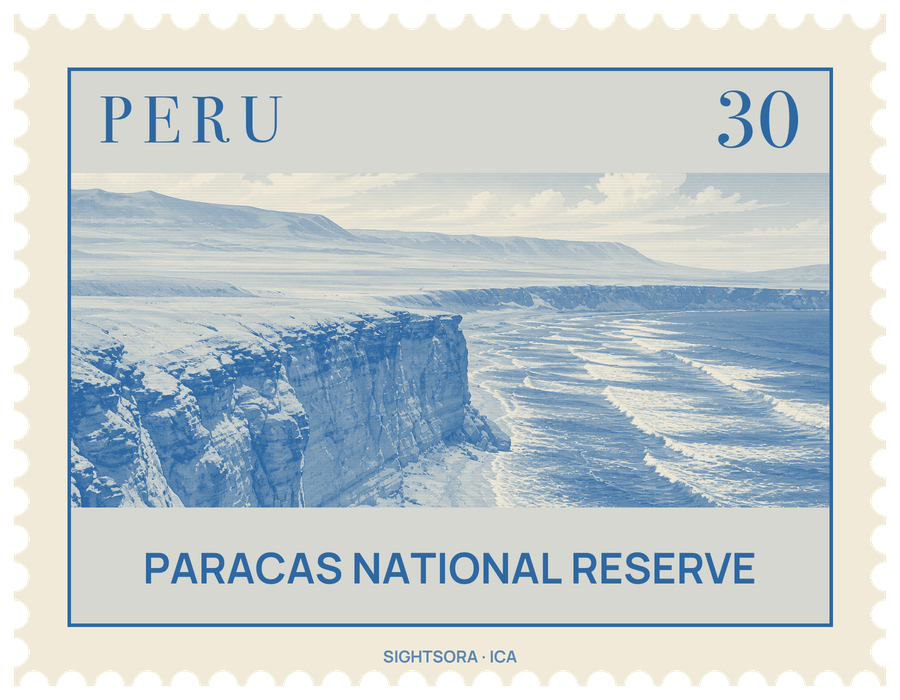
Of its 335,000 hectares, 65% is sea, and on land the ground rises no higher than 786 m. The reserve takes in the Paracas Peninsula, Paracas Bay, Independencia Bay and the islands of San Gallán and Independencia.
The land is arid and swept by strong local winds called paracas. Rain is scarce and falls mostly on the tops of the highest hills, where it keeps the lomas plant community alive. Most of the wildlife lives along the shore and in the water: some 216 bird species, 36 mammals, 10 reptiles and 168 fish have been counted. Among the birds are the Humboldt penguin, Peruvian pelican, Inca tern, guanay cormorant, Chilean flamingo and Andean condor, and BirdLife International has named the reserve an Important Bird Area. Offshore live South American sea lions and fur seals, marine otters, dusky and bottlenose dolphins and several kinds of whale, among them humpback and sperm whales.
More than 100 archaeological sites lie inside the reserve, many of them left by the Paracas culture, which is known above all for its textiles. Beach trips and wildlife watching are the main things visitors come to do.