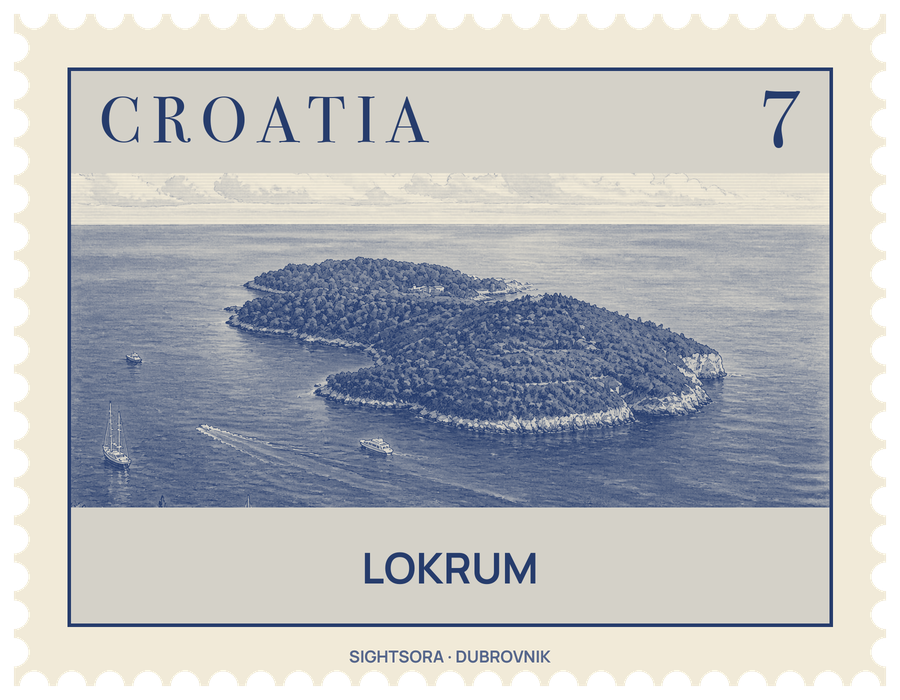
Thick Mediterranean vegetation covers it: laurel, oak, pine, black pine and cypress, with olives, agaves, cacti, magnolias and palms among them. A small natural harbour opens on the sheltered eastern side, and the island enjoys double protection, both as a nature reserve and for its special forest vegetation.
Its recorded history starts in 1023, when a Benedictine abbey was founded here, and the name is thought to come from the Latin for sour fruit, after the exotic plants the monks first grew. The Dubrovnik earthquake of 1667 left the abbey's triple-naved basilica and its 14th-century wing badly damaged, and part of the monastery buildings now houses a museum. A popular legend tells of the departing monks walking around Lokrum by night, dripping candle wax and laying a curse on anyone who would claim it, and another legend has Richard the Lionheart shipwrecked here in 1192 on his way home from the crusades.
In 1859 Archduke Maximilian of Habsburg, later the short-lived Emperor of Mexico, had a mansion built on the island with gardens laced with paths. The oval pond known as Charlotte's Well dates from his time, and the peacocks that roam the island descend from birds he brought from the Canary Islands. A botanical garden founded in 1959 grows native plants alongside tropical and subtropical species from Australia and South America.
On the southern side lies the Dead Sea, or Mrtvo More, a small salt lake about 10 metres deep that is thought to have formed when a large cavern collapsed; caves and fissures connect it with the open sea, and swimmers and divers can follow some of them out. On the island's highest point, 96 metres above the sea, stands Fort Royal, begun by the French in 1806 and completed by Austria in 1835, with views across to Dubrovnik.
Getting there
Regular ferries run to Lokrum from the port of Dubrovnik's Old City.