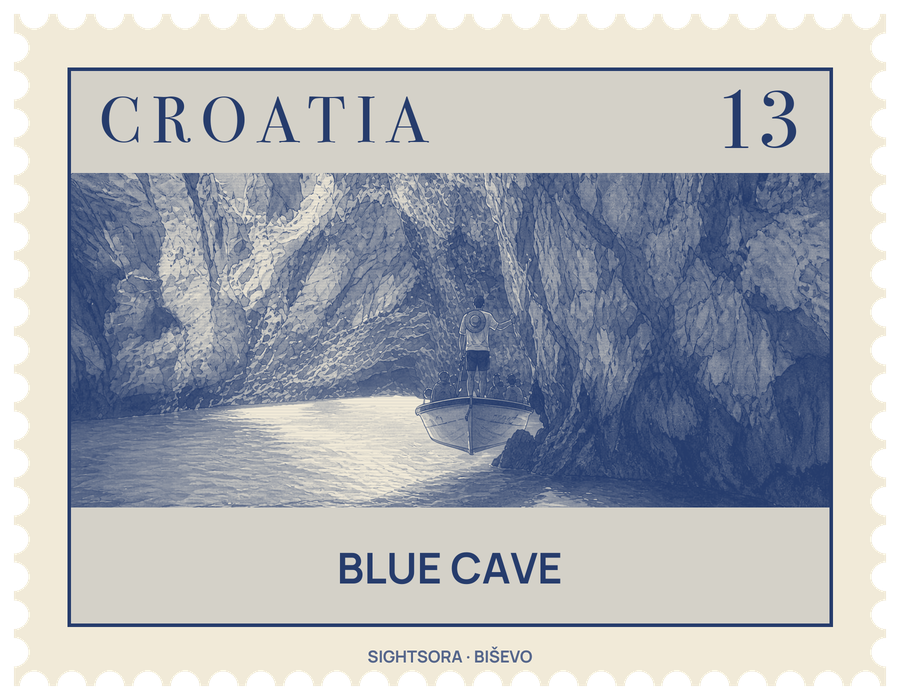
Its interior is modest in size, 18 metres long with water 6 metres deep and a roof 6 metres high, and the entrance above the water is just 1.5 metres high and 2.5 metres wide. What draws visitors is the light: when the sun is high, its rays pass through an underwater opening, bounce off the pale floor and fill the chamber with blue, while anything in the water looks silver.
Local fishermen had long known the cave when, in 1884, they showed it to the Austrian painter, explorer and speleologist Eugen von Ransonnet-Villez. He wrote about it in the Viennese newspaper Neue Freie Presse, judging it more beautiful even than the famous Blue Grotto on Capri, and from then on it became a destination for travellers.
Biševo itself is a limestone island with pine forest on its northern part, maquis and bare rock elsewhere, and a fertile field at its centre. Its steep coast is full of caves; on the south-east side the Monk Seal Cave, also called Medvedina, opens in a tall, narrow cleft some 30 metres high and runs for 160 metres to a small beach, named after the Mediterranean monk seals that once lived there. Near the ruins of a Benedictine monastery founded in 1050, the church of Saint Sylvester still stands.
Getting there
The cave can be approached only by boat. Biševo lies 5 km from Vis, to its south-west.