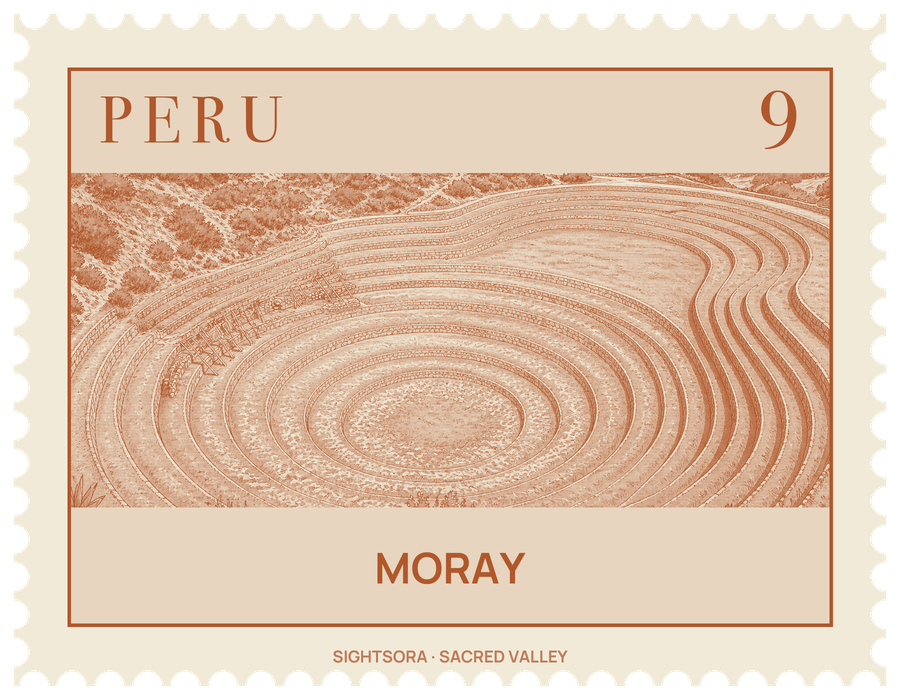
The site lies at around 3,500 metres, roughly 50 kilometres northwest of Cusco, a short way west of Maras village, and like many Inca sites it has its own irrigation system.
Nothing written explains what the bowls were for, but their depth, shape and orientation to the wind and sun make the bottom as much as 15 °C colder than the rim. Cold air sinks and collects in a closed basin, especially on clear, still nights, so each terrace level has its own microclimate, much as a modern greenhouse does. The most widely held view is that the Incas farmed here, and soil tests have shown that earth was brought from different regions for the different levels; moving a planting a little up or down the slope would have changed its conditions as if it had been grown much higher or lower in the mountains. Another idea is that the hollows began as open-pit mines whose walls were later reinforced and planted.
The terraces are built of stone and packed earth, which makes them vulnerable to rain. After very heavy rainfall in the 2009–2010 wet season the ground beneath them was undermined, and in February 2010 part of the main circle gave way on its eastern side; a temporary wooden structure was put up to hold it until it could be rebuilt.