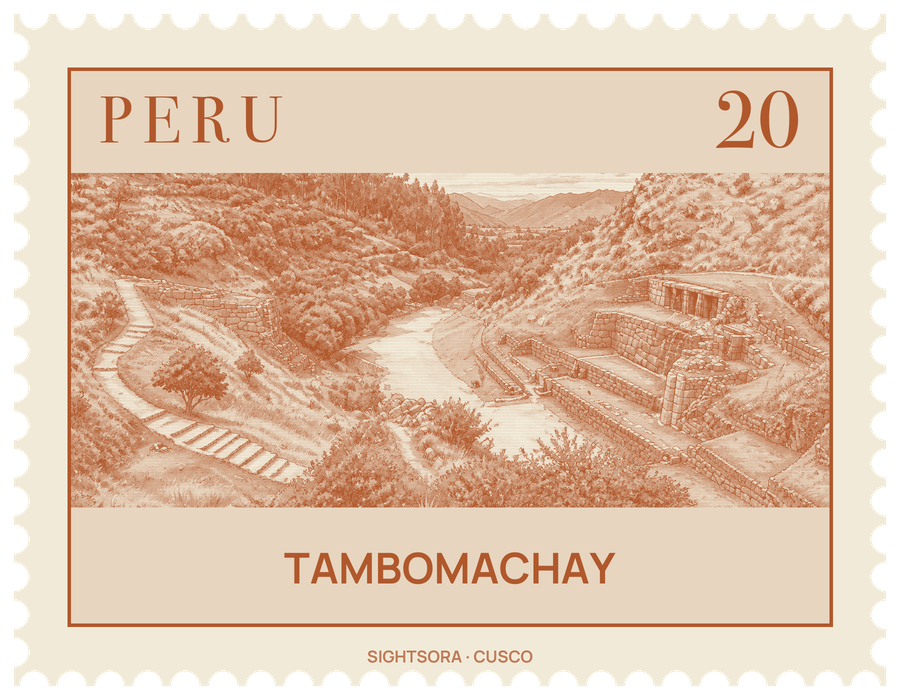
The Spanish nickname, El Baño del Inca, means "the bath of the Inca"; the Quechua name may join tampu, an inn or guest house, with mach'ay, a cave.
The water comes from natural springs nearby, among them Timpuc Puquiu, a boiling spring on the north bank of the Timpuc River, and another close to the Huaylla Cocha community. The site may have been a military post watching the approaches to Cusco, a bathing place for the Inca political elite, or a religious site, since sacred fountains turn up at almost every major Inca temple, Pisac, Ollantaytambo and Machu Picchu among them. It is also described as one of the nine ceques along the Road of Antisuyu, an Inca house where sacrifices were made.