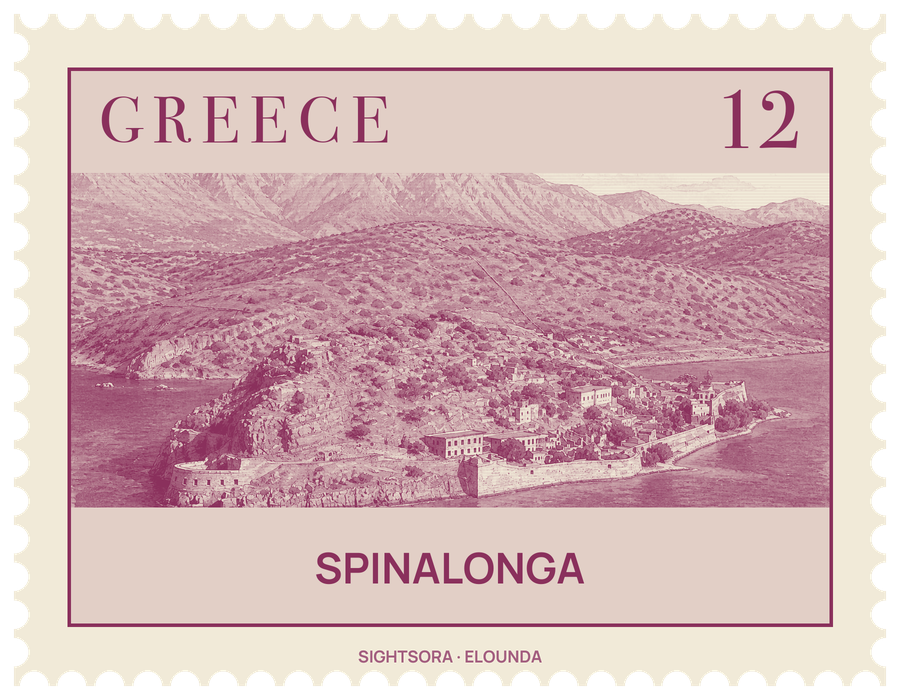
It covers only 85,000 square metres, with steep cliffs on the north, pebble beaches elsewhere and a high point of around 50 metres. A Venetian sea fortress rings it, and inside the walls stand the houses and streets of the leper colony that occupied it from 1904 to 1957. The island should not be confused with the larger Spinalonga peninsula nearby, which shares the name.
The Venetians, who held Crete from 1210, fortified the island to guard the gulf and the salt pans they had built in its shallow water. The engineer Genese Bressani planned the defences in 1578, and in 1579 Luca Michiel laid the foundation stone; inscriptions recording the event survive over the main gate and on the base of the northern rampart. In 1584 further works were added on the hilltop, and the fort was armed with 35 cannons. Spinalonga held out as a Venetian outpost long after the rest of Crete had fallen to the Ottomans, and was handed over only in 1715. Muslim families then settled inside the walls, and by 1830 there were 80 of them.
In 1903 the Cretan state ordered that people with leprosy be isolated on Spinalonga, and the first 251 patients arrived in October 1904. The colony was a place of confinement rather than treatment; conditions were squalid, a yellow flag on the highest point warned passing boats, and the names of those sent there were struck from the registers of their home towns. Things began to change from 1925, when a doctor started treating residents, and above all after 1936, when the young law student Epaminodas Remoundakis arrived and founded a brotherhood of the sick that cleaned the streets, cut a path around the island for disabled residents, and won permission for marriages, shops, a café, electricity and a cinema. The patients were moved to Attica in 1957, and the island's last resident, a priest, left in 1962.
After decades of abandonment and looting, the island was declared an archaeological site in 1976 and opened formally to visitors in 2000. Victoria Hislop's 2005 novel The Island, later adapted for television, brought it a wide audience. Patients once arrived at the southern dock; today visitors walk among the colony's houses, the former mosque that served as its medical unit, the market buildings and the cemetery, where the bones of the dead now lie in an ossuary with new plaques. There is a small snack bar near the dock.
Getting there
Tourist boats run to the island from Plaka, Elounda and Agios Nikolaos; Plaka is the closest, about 750 metres across the water.