


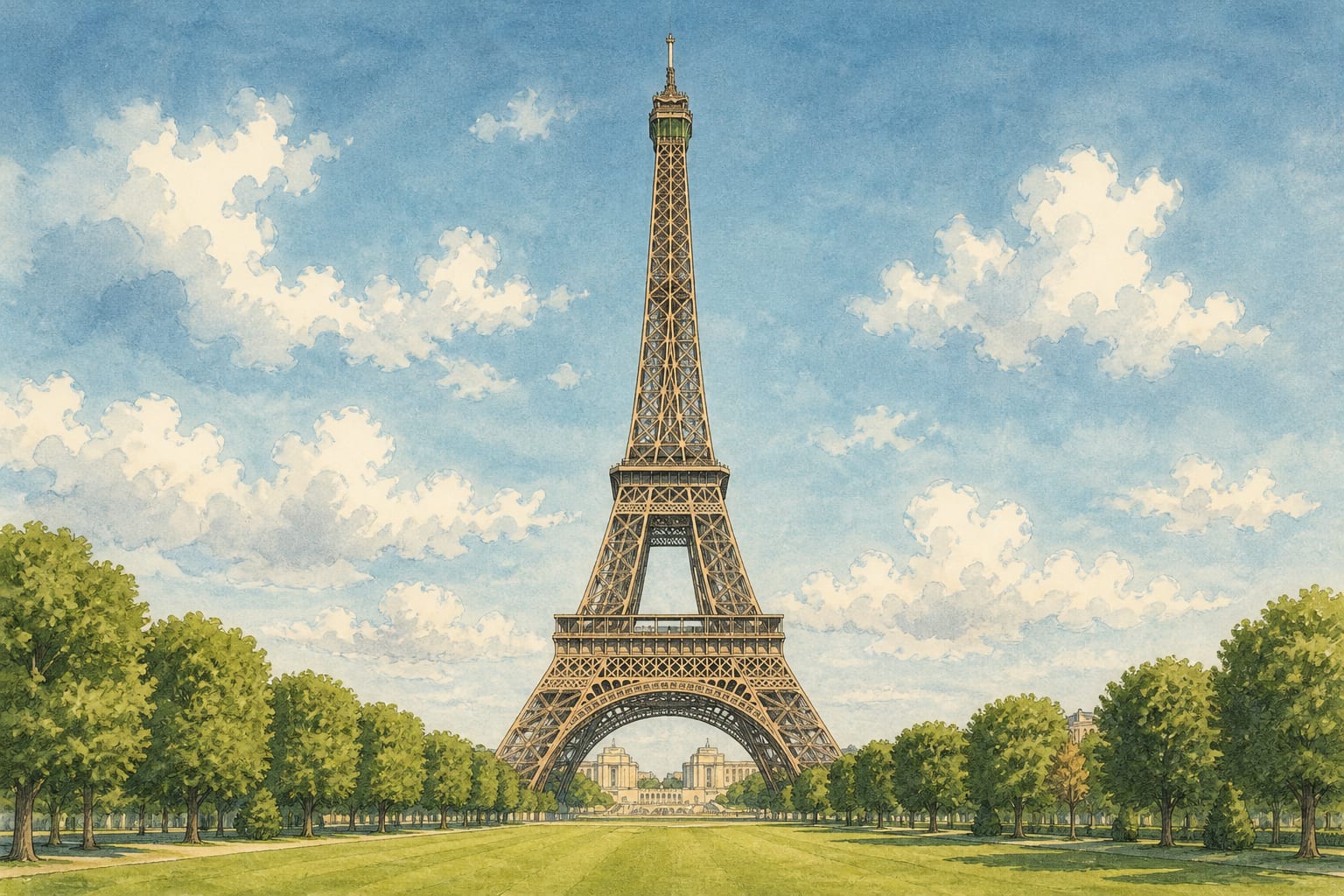
Cover: Eiffel Tower. The banner above is an illustration, not a photograph. It was drawn to suggest the place, and the details may differ from the real thing. Drawn from a photo on Wikimedia Commons (opens in a new tab) by Benh LIEU SONG. Photo licence: Public domain.
Sights in Paris
- UNESCO
- UNESCO
- UNESCO
- UNESCO
- UNESCO
- UNESCO
- UNESCO


- Eiffel Tower
- Over 300 metres of riveted wrought iron rise from the Champ de Mars beside the Seine, on a square base 125 metres to a side.
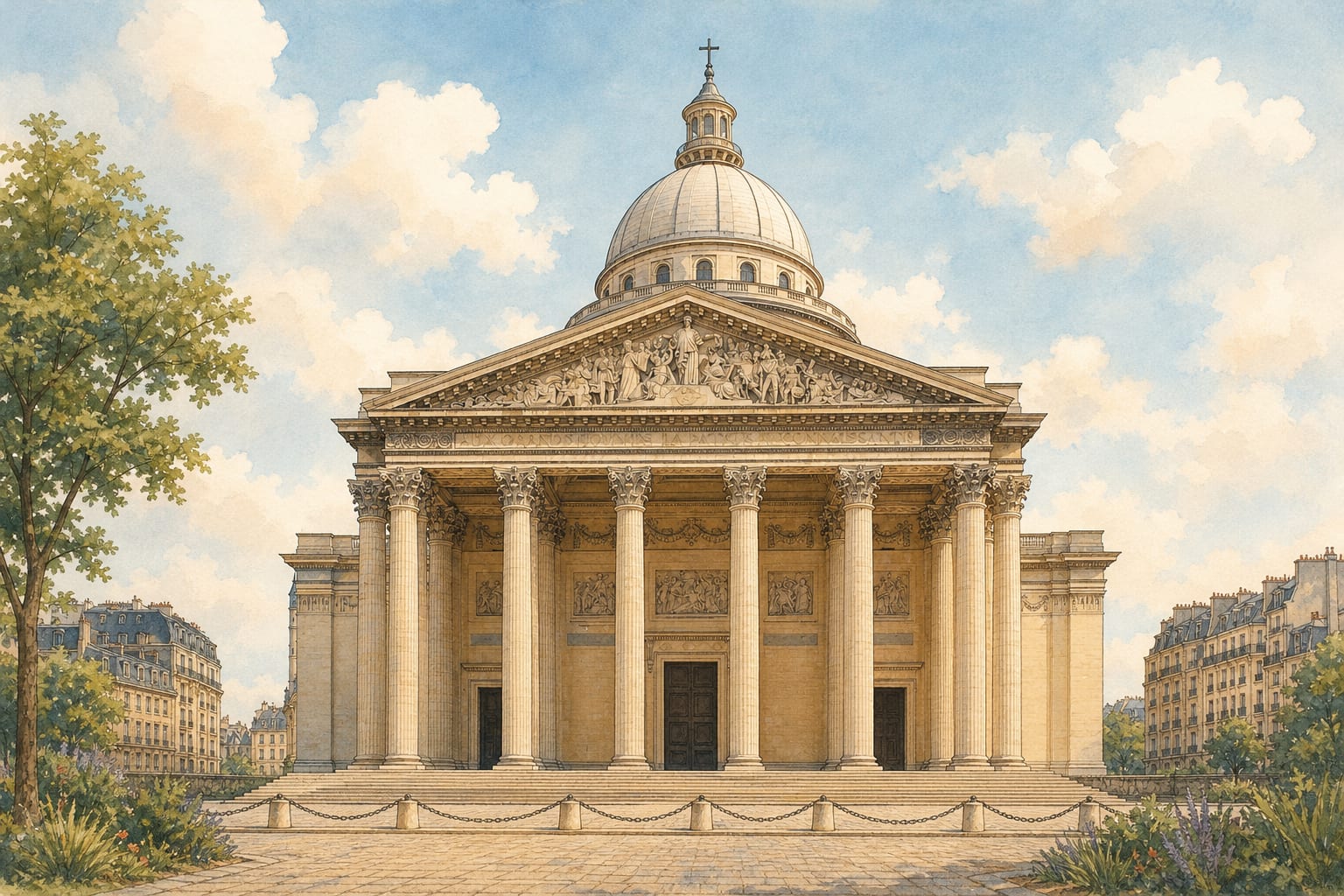
- Panthéon
- A colonnaded temple front and a stone dome 83 metres high crown the Montagne Sainte-Geneviève in the Latin Quarter, at the centre of the square that took its name, the Place du Panthéon.
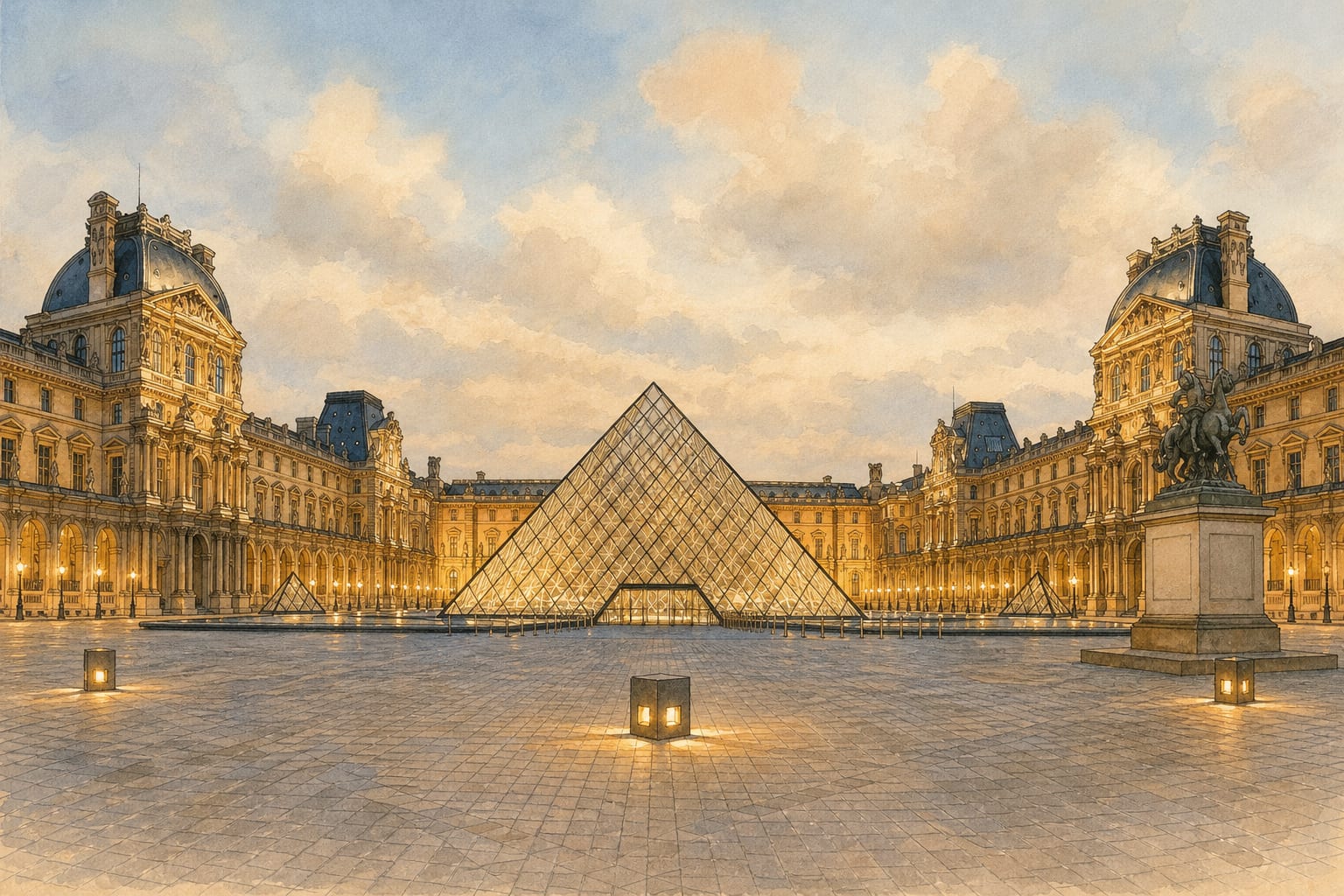
- Louvre Museum
- The Mona Lisa, the Venus de Milo and the Winged Victory of Samothrace all live in the Louvre, the national art museum that fills the old royal palace on the Right Bank of the Seine, next to the Tuileries Gardens in the 1st arrondissement.
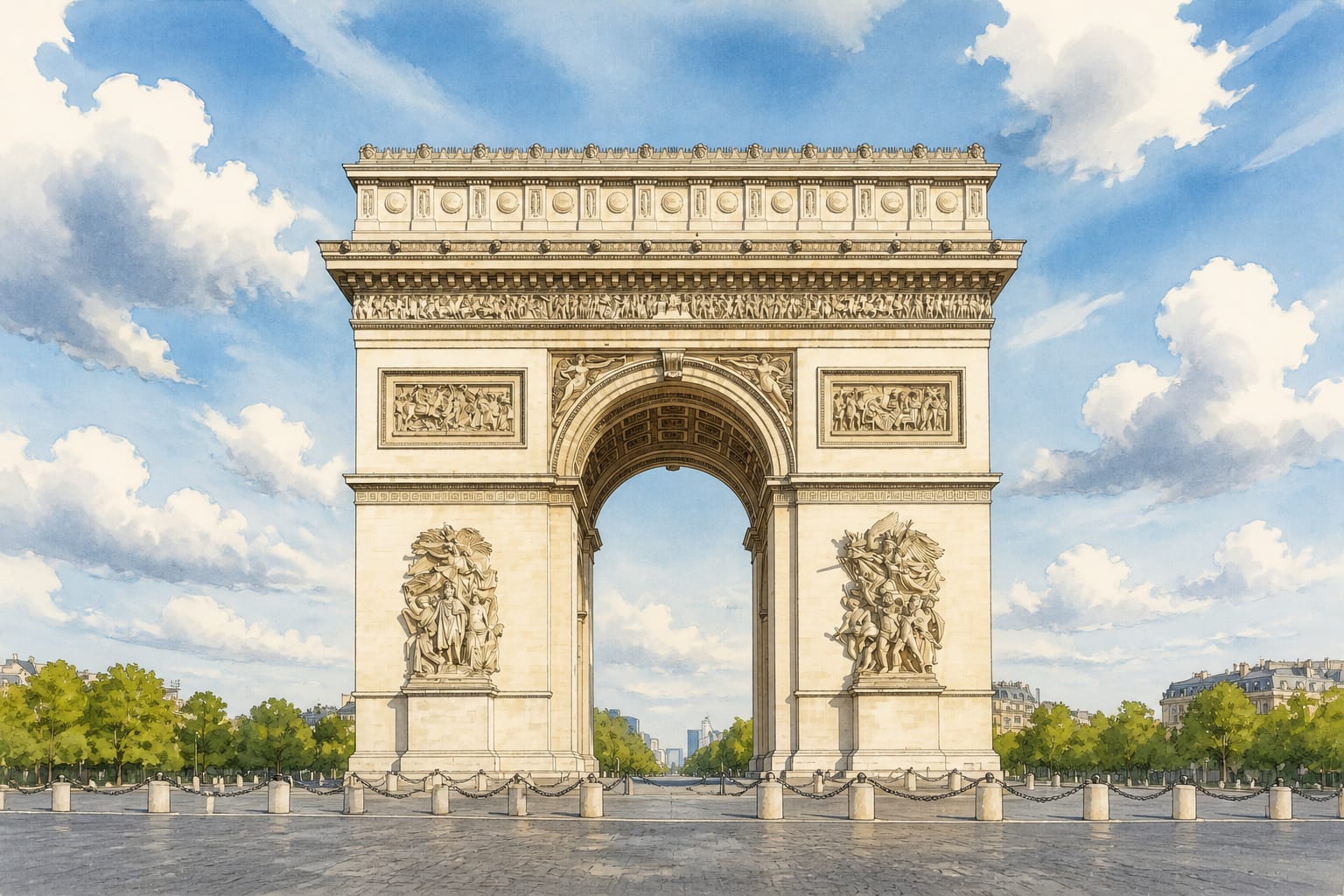
- Arc de Triomphe
- At the top of the Champs-Élysées, in the middle of a vast roundabout where twelve avenues meet in a star, stands the triumphal arch Napoleon ordered in 1806, after his victory at Austerlitz.
- Musée d'Orsay
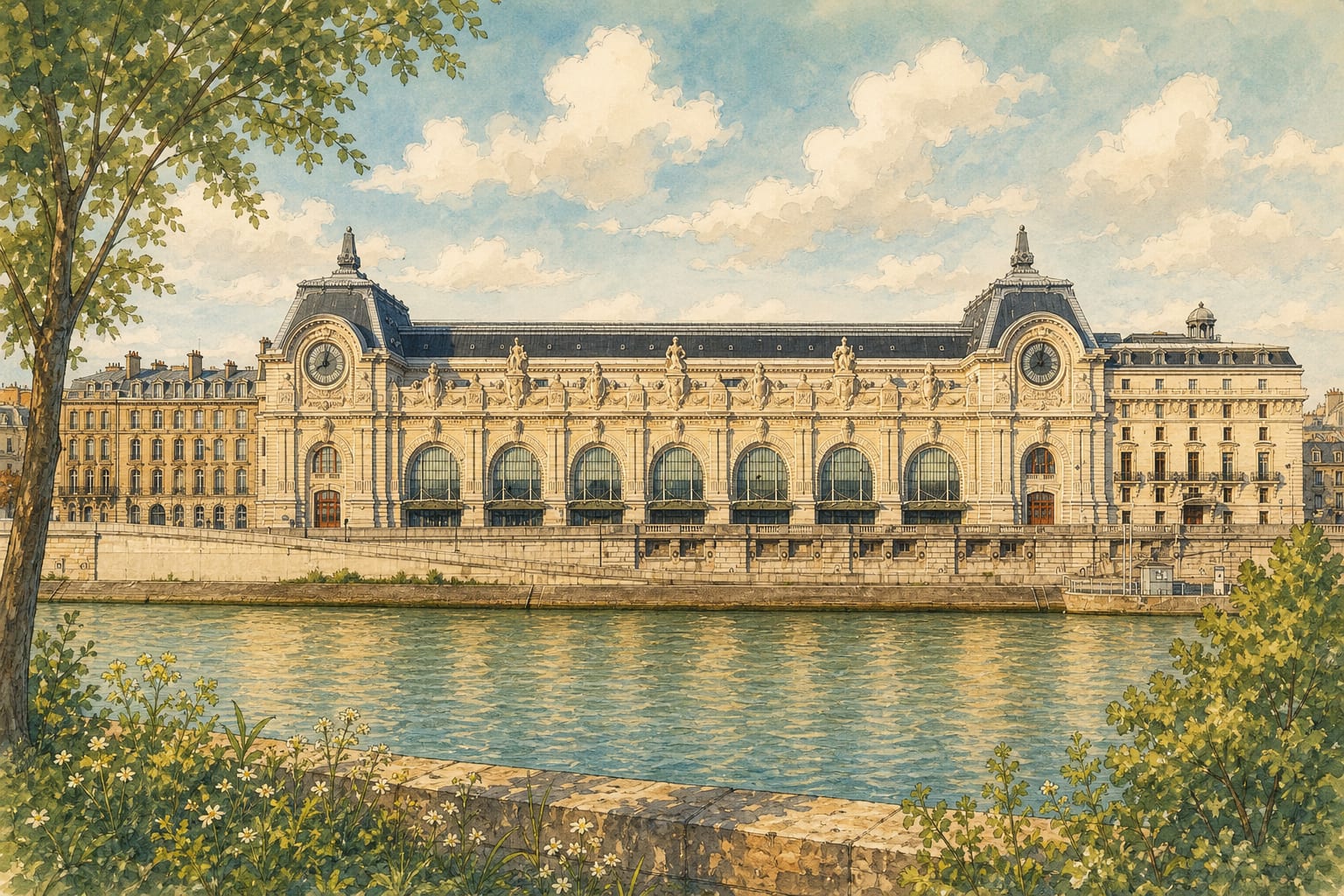
- Beneath a great barrel-vaulted roof on the Left Bank of the Seine, the Musée d'Orsay fills a Beaux-Arts railway station that the railway company serving the route from Paris to Orléans built between 1898 and 1900, in time for the Exposition Universelle of 1900.
- Sainte-Chapelle
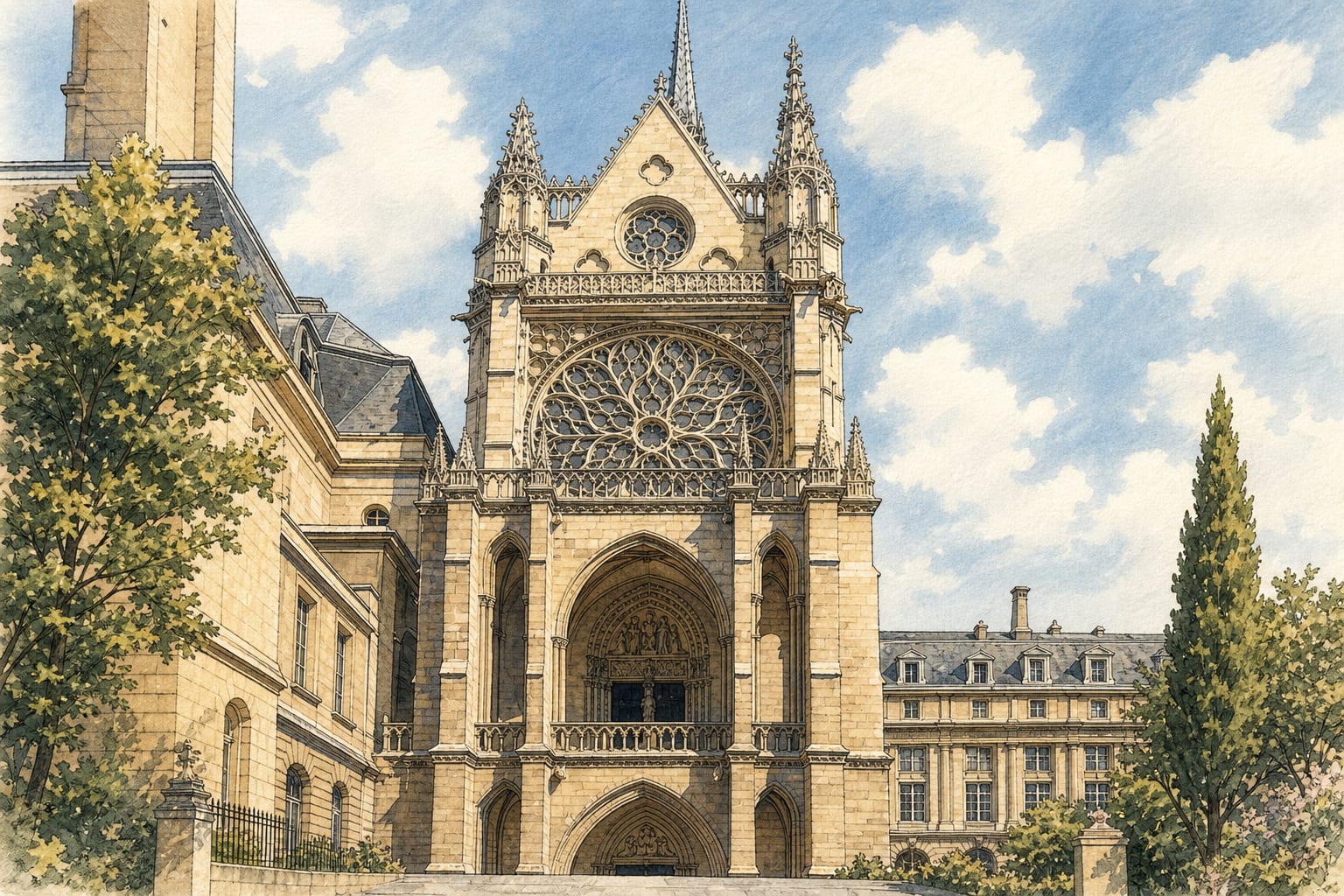
- On the Île de la Cité, within the judicial complex of the Palais de Justice, stands the royal chapel King Louis IX built to hold the relics of Christ's Passion, above all the Crown of Thorns.
- Palais Garnier
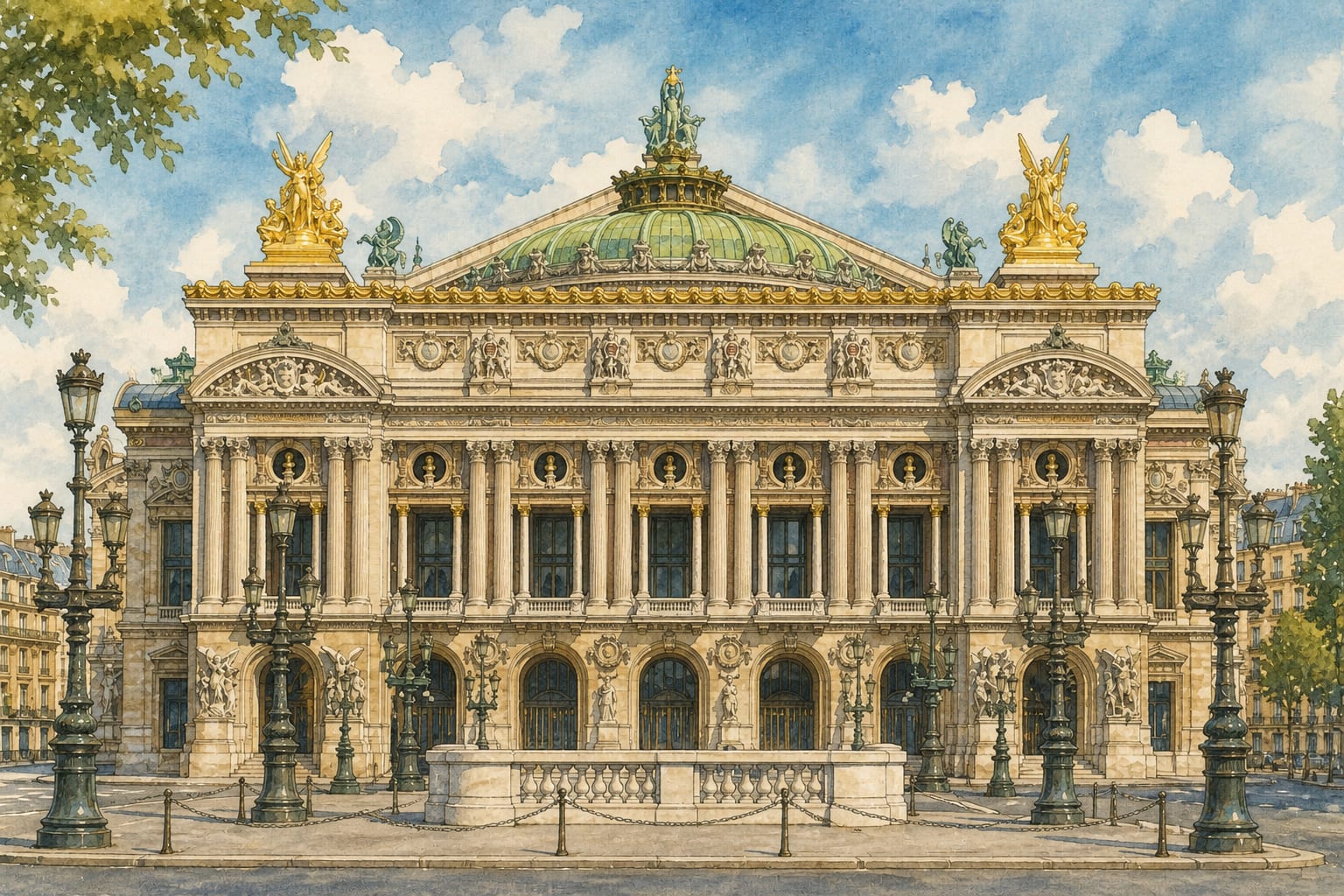
- Gilded statues, coloured marble and a frieze of bronze composers' busts mark the front of the Palais Garnier, the opera house that closes the view up the Avenue de l'Opéra in the 9th arrondissement.
- Catacombs of Paris
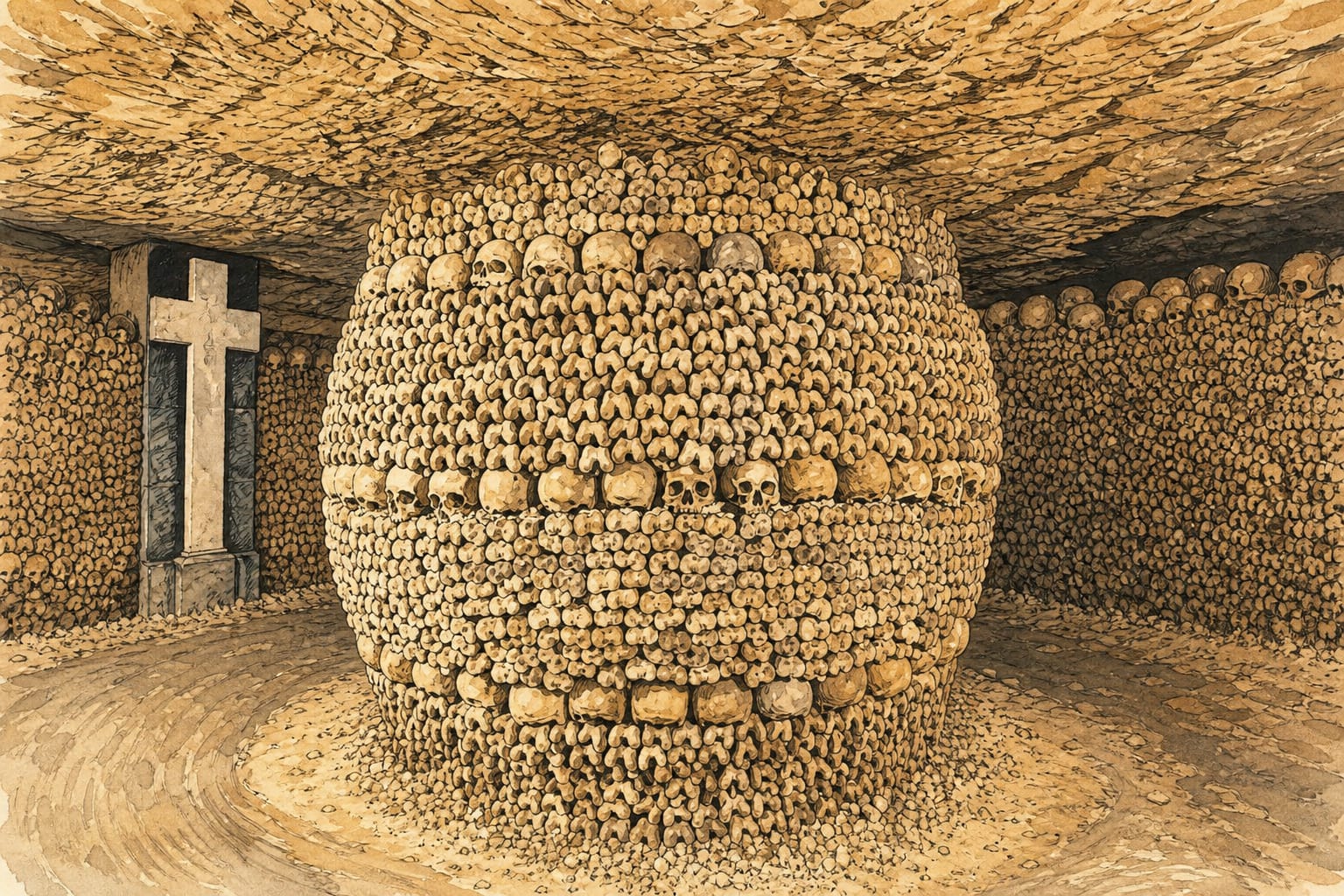
- Twenty metres below the streets of southern Paris, the Catacombs of Paris lead visitors along a route about one and a half kilometres long through old limestone quarry galleries whose walls are built from human bones.
- Musée de l'Orangerie
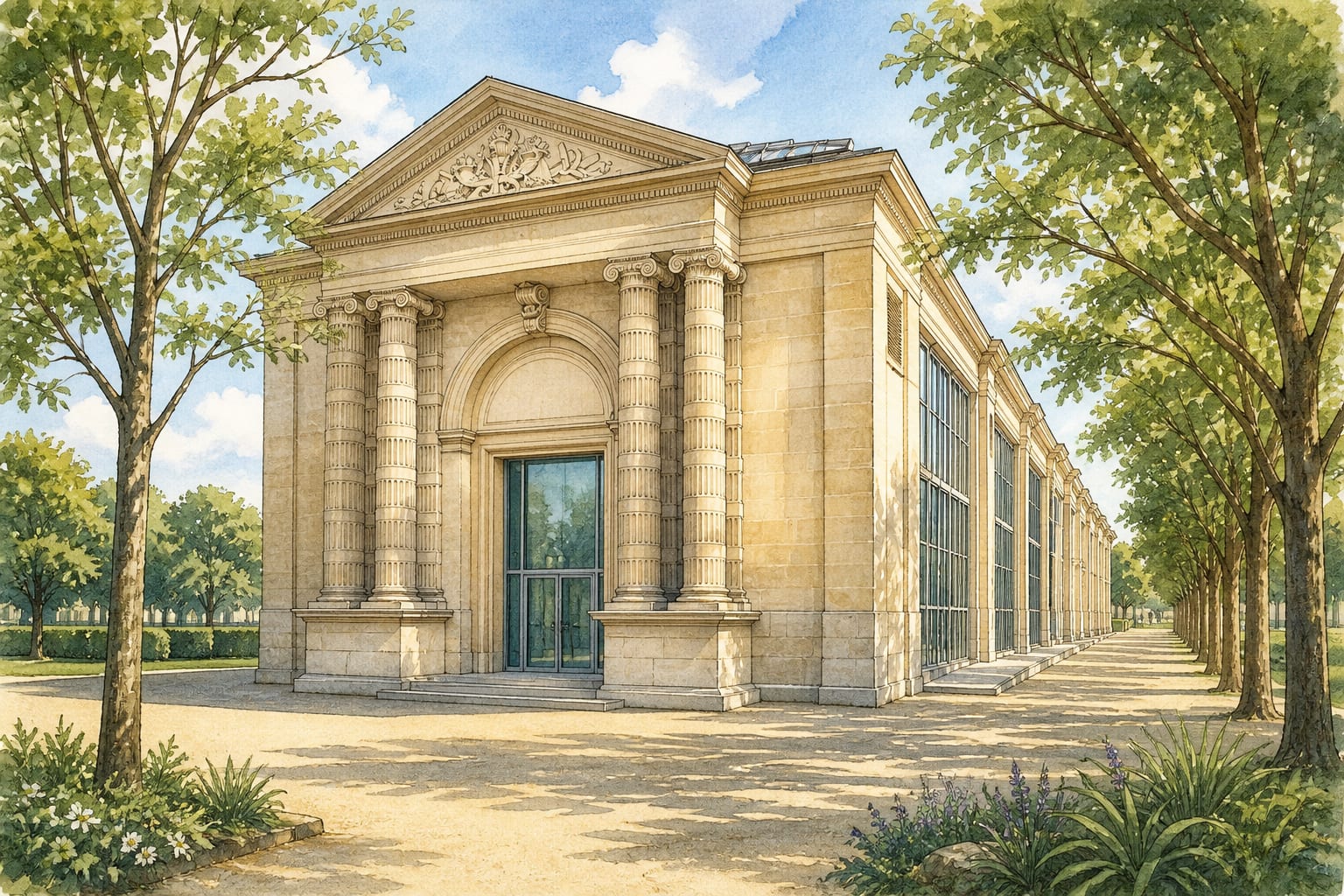
- At the western end of the Tuileries Garden, beside the Place de la Concorde and the Seine, a long former greenhouse holds Claude Monet's Water Lilies: eight huge panels hung around two oval rooms that together trace the sign for infinity.
- Fondation Louis Vuitton
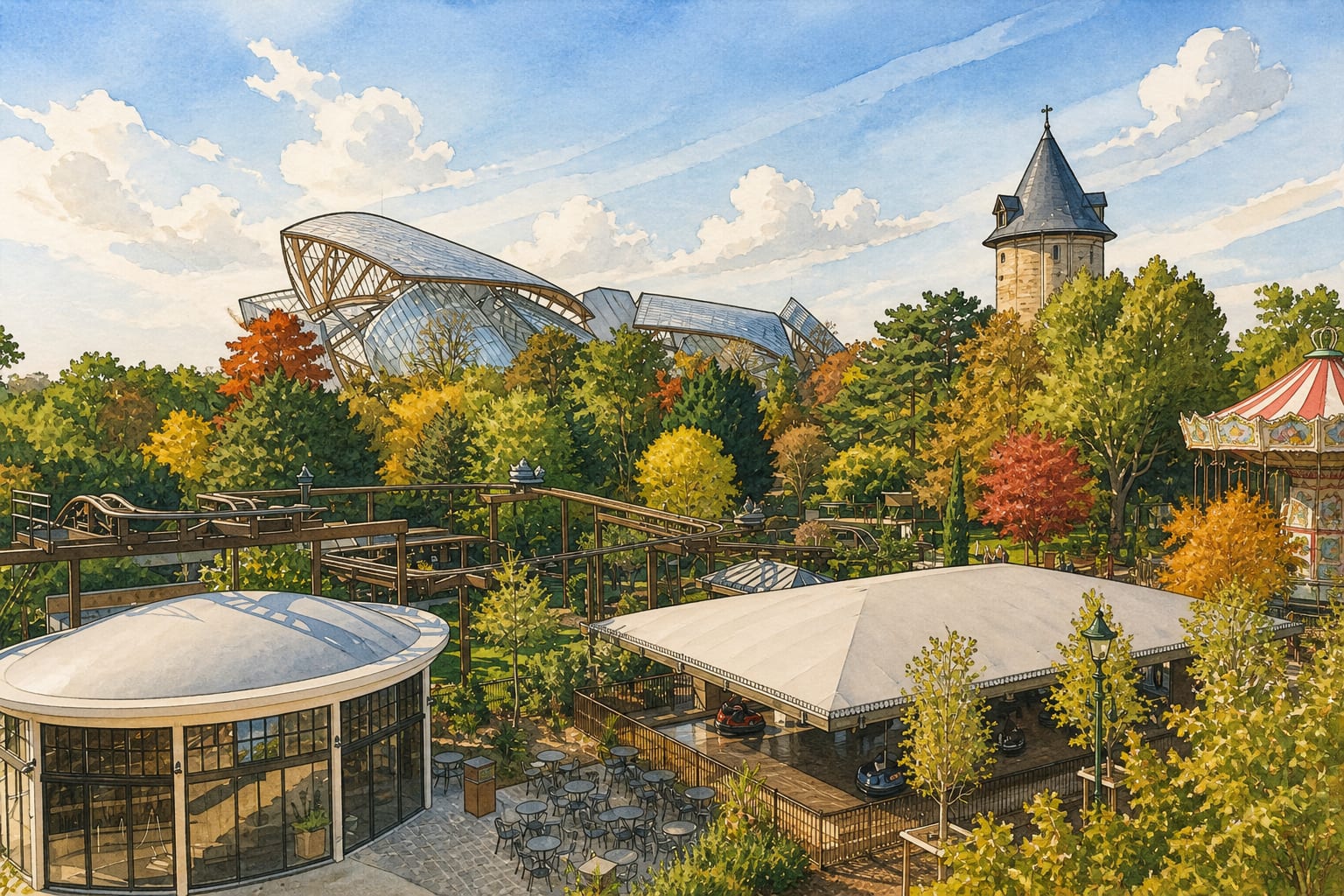
- Where the Bois de Boulogne meets the Jardin d'Acclimatation, Frank Gehry's building for the Louis Vuitton Foundation looks like a ship under sail: curved glass panels swell around a core of white, terraced shapes that the architect called the "iceberg".
- Notre-Dame Cathedral
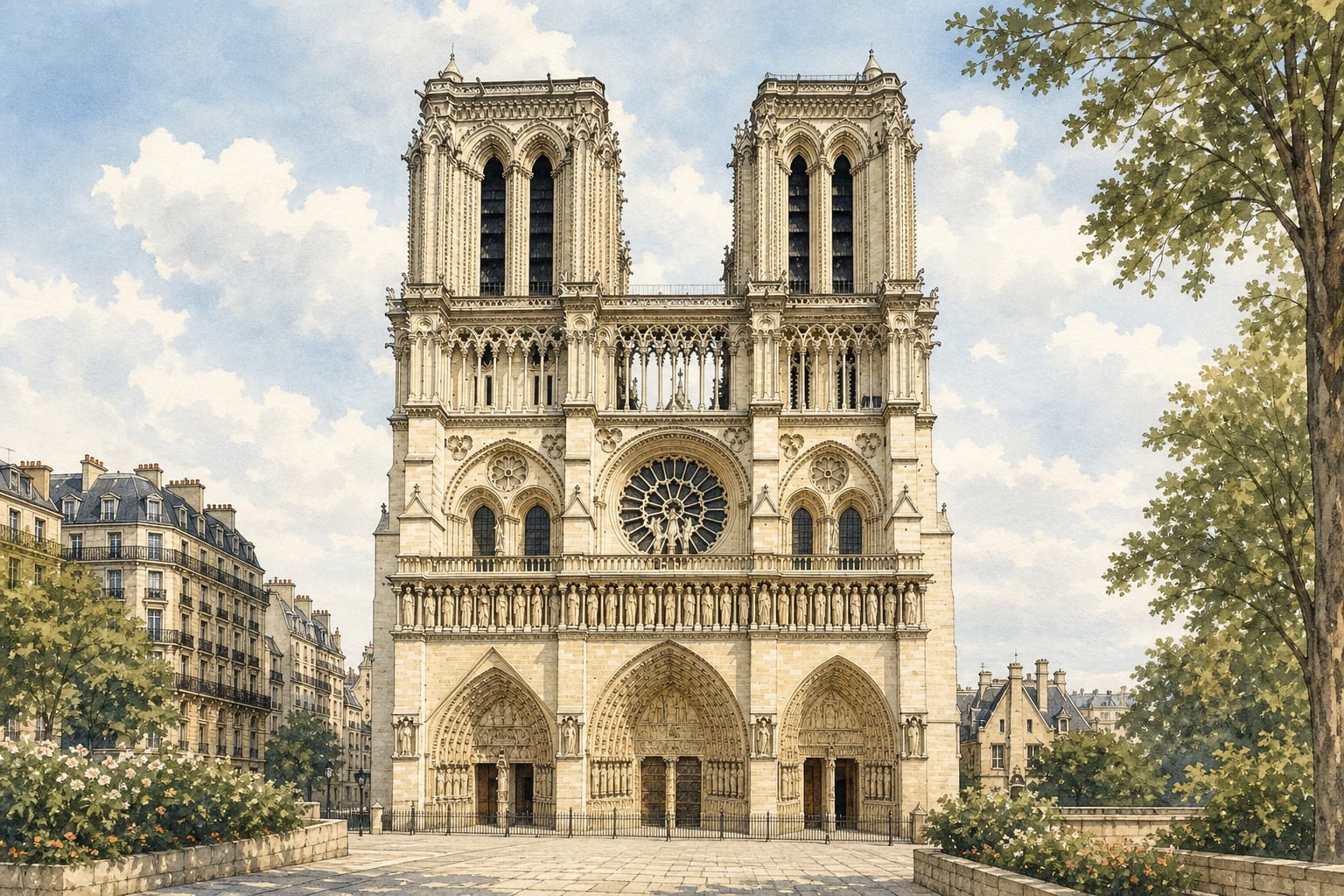
- Notre-Dame de Paris rises from the Île de la Cité in the middle of the Seine, its twin towers of 69 metres facing a broad square in front.
- Musée Rodin
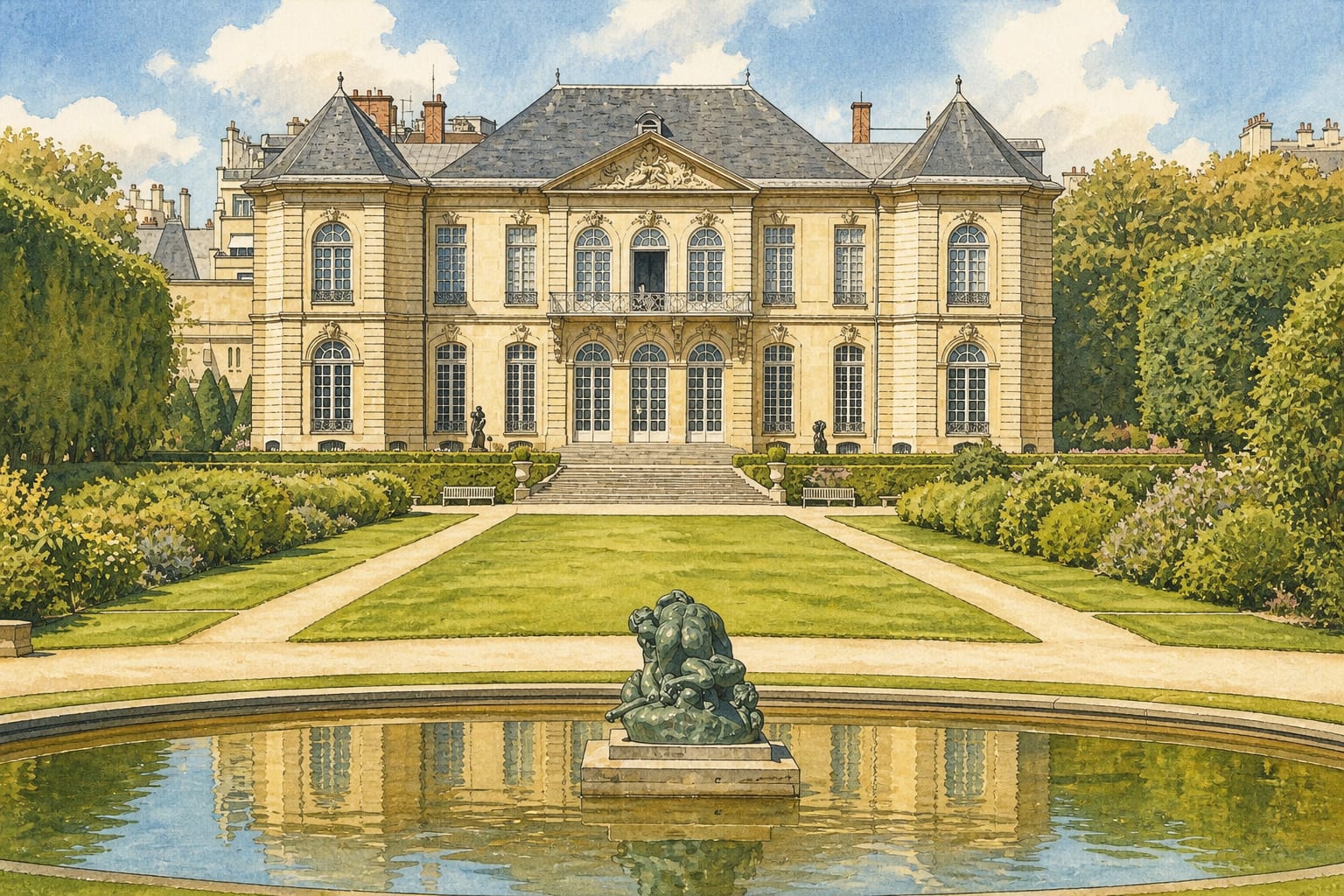
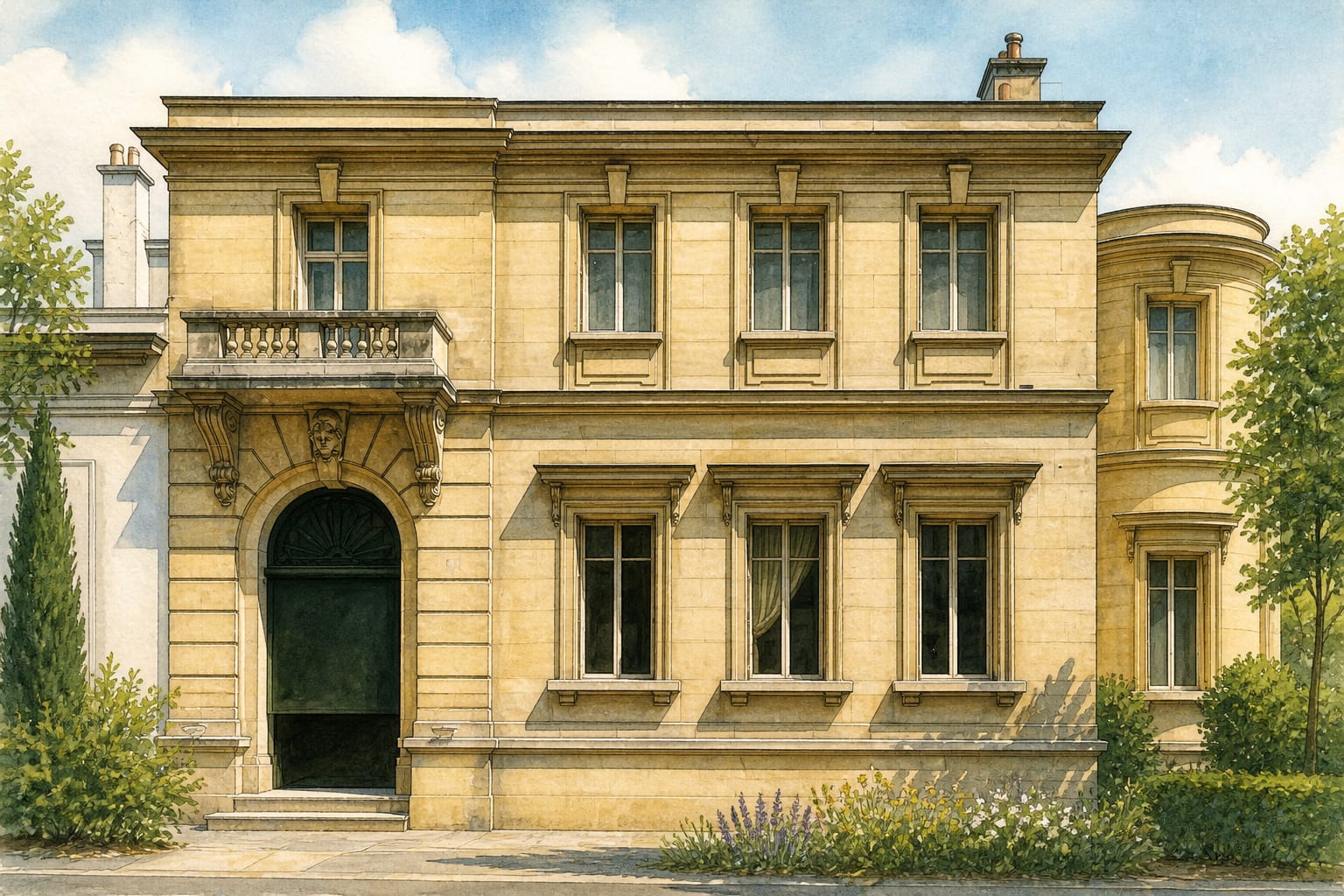
- On the Rue de Varenne in the 7th arrondissement, The Thinker sits in a sculpture garden, and the 18th-century mansion behind it, the Hôtel Biron, holds much of the rest of Auguste Rodin's life's work.
- Musée Marmottan Monet
- Claude Monet's Impression, Sunrise, the 1872 harbour view that gave Impressionism its name, hangs in a former hunting lodge on the edge of the Bois de Boulogne.
- Musée du quai Branly
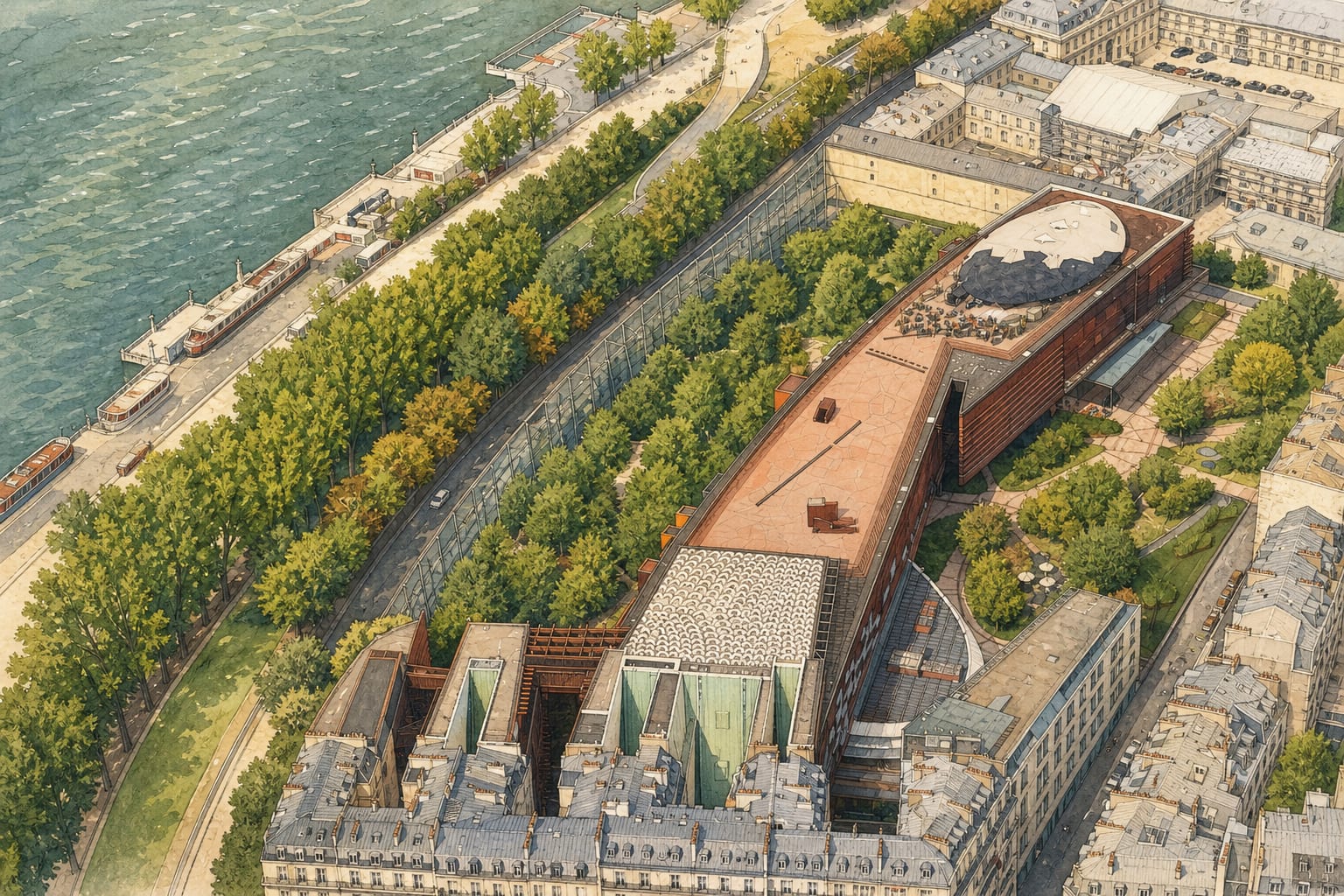
- Behind a tall glass screen and a deliberately wild garden on the Seine's left bank, a short way from the Alma bridge and the Eiffel Tower, Jean Nouvel's museum is devoted to the art and cultures of the Americas, Oceania, Asia and Africa.
- Sacré-Cœur
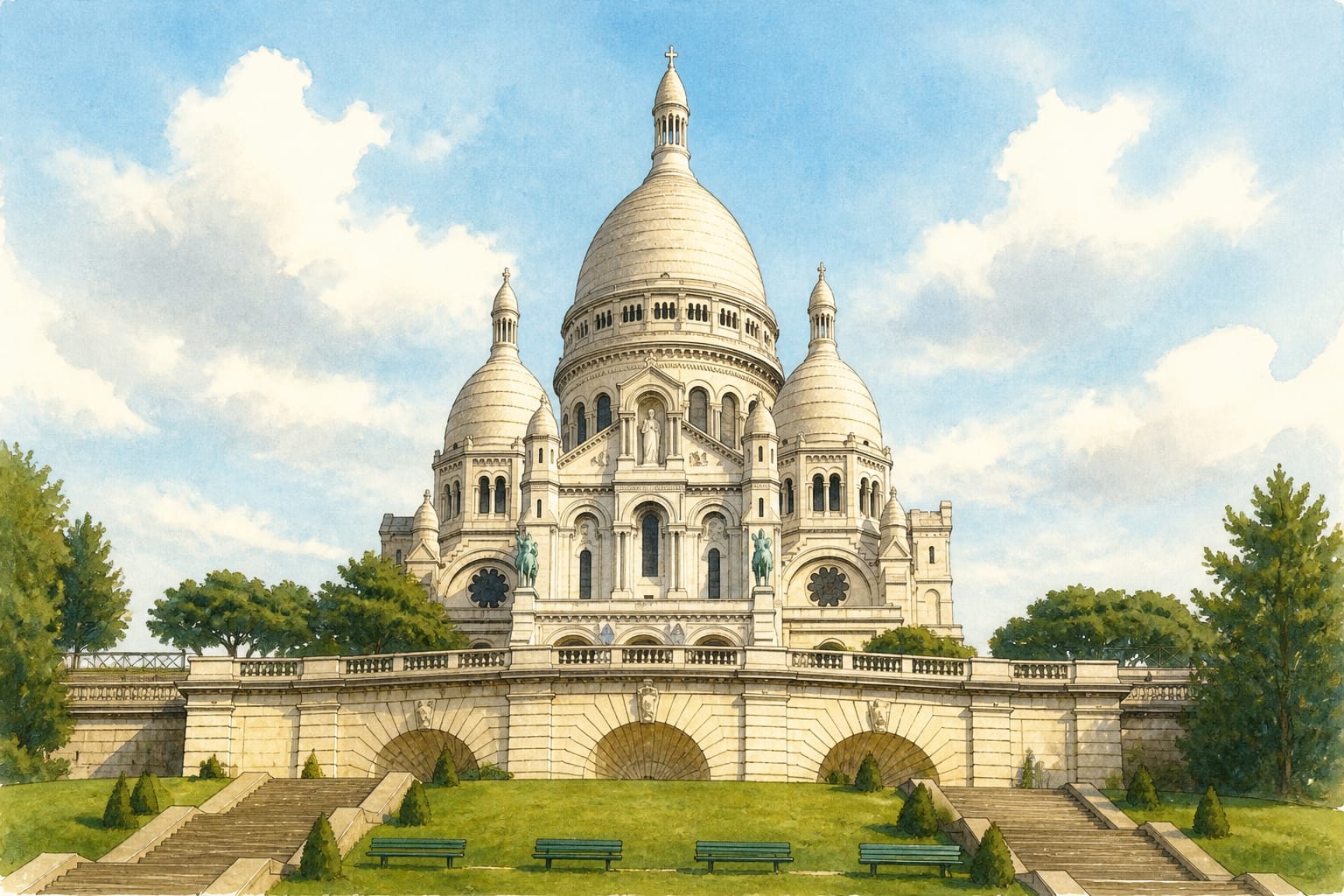
- From the top of the butte of Montmartre, the white domes of the Basilica of the Sacred Heart look out over the whole of Paris, the city spreading away to the south below its main façade.
- Conciergerie
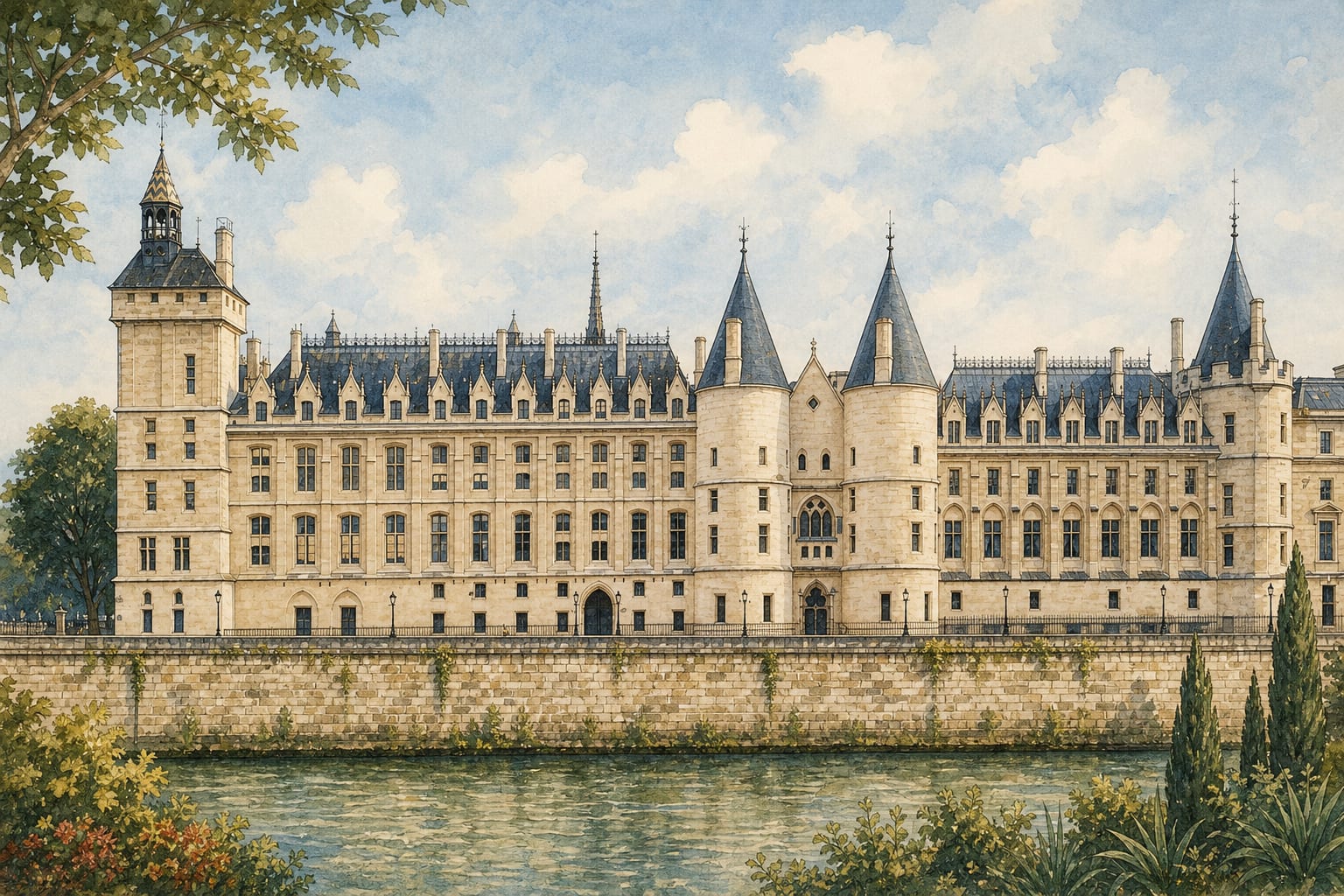
- On the western end of the Île de la Cité, beneath the Palais de Justice, the Conciergerie keeps two great medieval halls of the Palais de la Cité, the palace of the French kings that also included the Sainte-Chapelle.
- Les Invalides
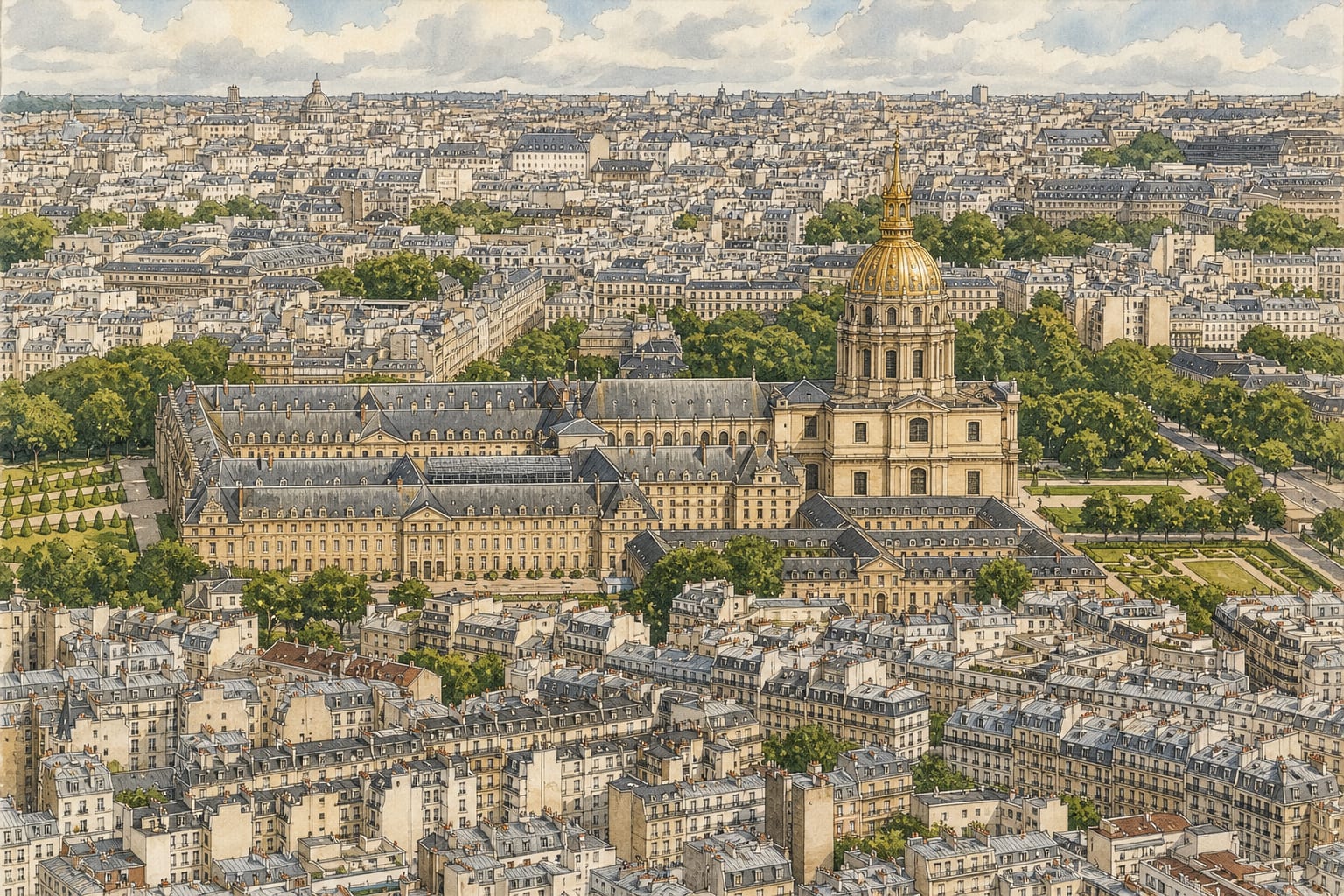
- Les Invalides is the vast complex in Paris's 7th arrondissement that Louis XIV ordered in 1670 as a home and hospital for old and wounded soldiers, and it is now the centre of France's military memory: army museums, the soldiers' cathedral and, under the gilded Dôme, the tomb of Napoleon.